If you’re working with wires, cables, or connectors, choosing the right types of crimping tools can make all the difference between a solid, reliable connection and a frustrating failure. Whether you’re an electrician, a DIY enthusiast, or tackling automotive or networking projects, understanding the variety of crimping tools out there is key to getting professional results every time. From simple manual crimpers to advanced hydraulic and ratcheting models, each tool serves a specific purpose—and knowing which one fits your needs will save you time, effort, and headaches. Ready to find the perfect crimping tool for your job? Let’s dive in.
What Is a Crimping Tool and How Does It Work?
A crimping tool is a hand-held device designed to join connectors to wires by deforming the connector around the wire. This deformation creates a gas-tight, permanent bond that ensures reliable electrical conductivity and mechanical strength. Unlike soldering, crimping provides a faster, cleaner connection without the need for heat.
The basic mechanism involves pressing the connector’s metal terminal using specially shaped jaws or dies. These jaws compress the connector onto the wire, locking them securely in place. Most crimping tools feature several key components:
Handles: Provide leverage and grip for applying pressure.
Jaws/dies: The crimping area where connectors are shaped and compressed.
Ratchet mechanism (on ratcheting crimpers): Ensures consistent pressure and complete crimps, preventing under- or over-crimping.
Crimping tools use different crimp profiles depending on cable type and connector design. Common profiles include:
Hexagonal: Offers reliable, strong crimps ideal for many electrical terminals.
Indent: Creates a distinctive footprint on the terminal, often used for wire terminals.
Oval: Provides flexibility for certain connectors, popular in coaxial and automotive applications.
Choosing the right crimp profile is crucial because it affects the connection’s durability and electrical performance. Understanding these basics helps you pick the right wire terminal crimper or specialized crimping tool for your job.
Main Categories of Crimping Tools by Operation
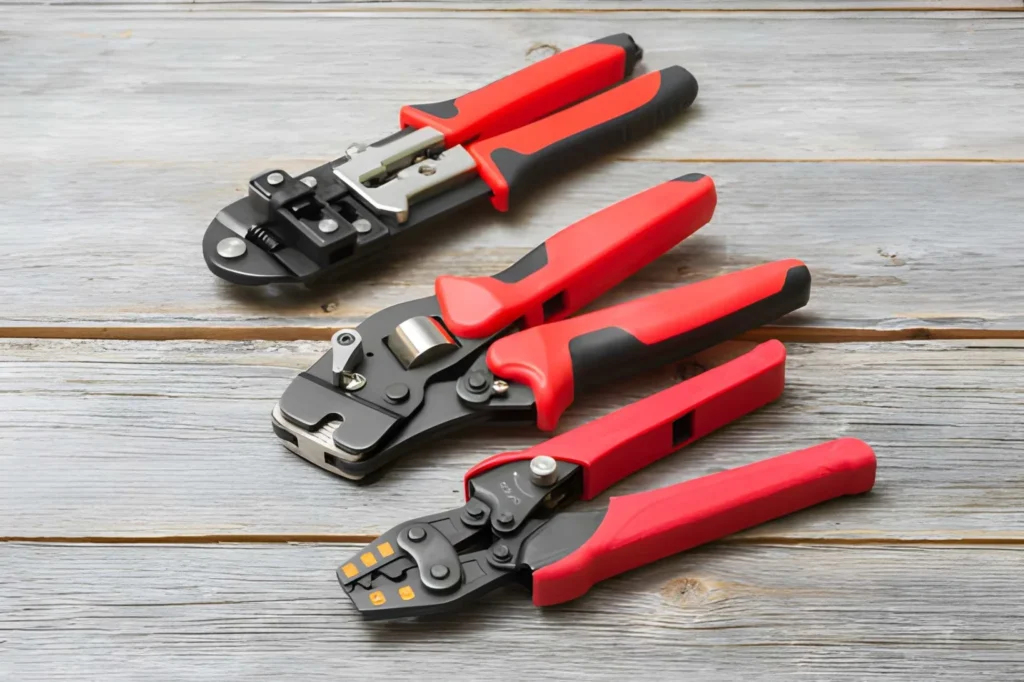
Crimping tools come in various types depending on their operation and intended use. Here’s a quick breakdown:
Handheld/manual crimping tools are simple and affordable, great for occasional users or small jobs. For more consistent quality, ratcheting crimpers are preferred—they hold the jaws closed until the crimp is complete, preventing weak connections.
When you need to crimp thick cables or heavy lugs, hydraulic crimping tools provide the required force without extra effort. For faster, repetitive work, battery-powered crimpers save time and reduce strain, making them ideal in production or large-scale maintenance.
At the industrial scale, pneumatic and benchtop crimpers offer the precision and power needed for exact crimps on a wide range of connector types.
For a detailed guide on crimping tool types and their uses, check out this comprehensive crimper tool guide that covers both basic and advanced options.
Choosing the right type based on your workload and connector type is key for durable, reliable crimps every time.
Specialized Types of Crimping Tools by Application
Crimping tools come in different types depending on the specific application, making it easier to get reliable, professional results every time.
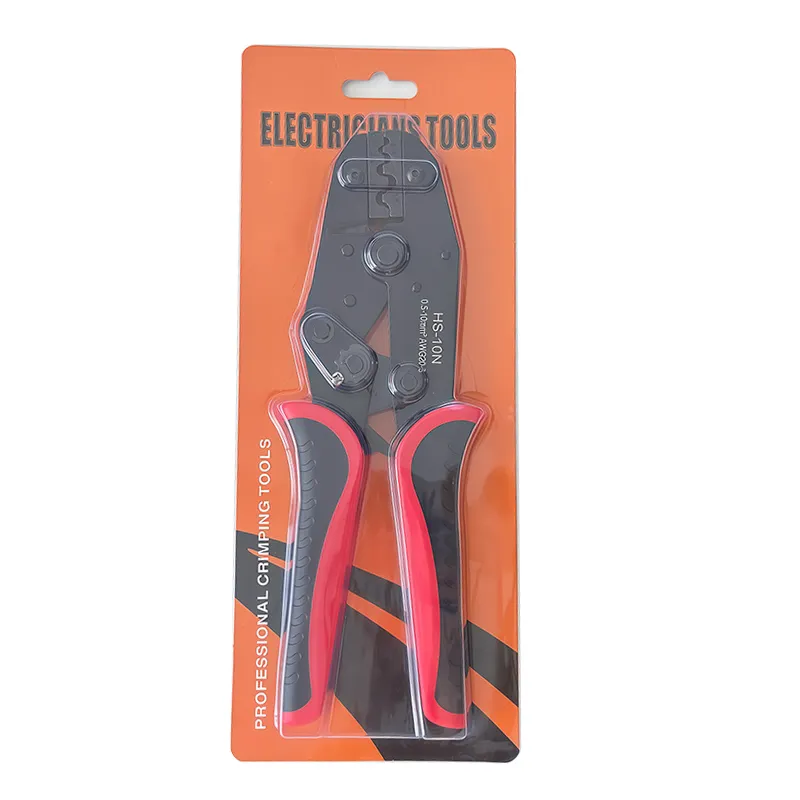
Electrical Wire Crimpers are designed for both insulated and non-insulated terminals, including bootlace ferrules. These tools ensure a secure, gas-tight connection for electrical wires, crucial for safe and durable circuits. For example, high-quality insulated terminal crimpers provide consistent crimps on various wire gauges.
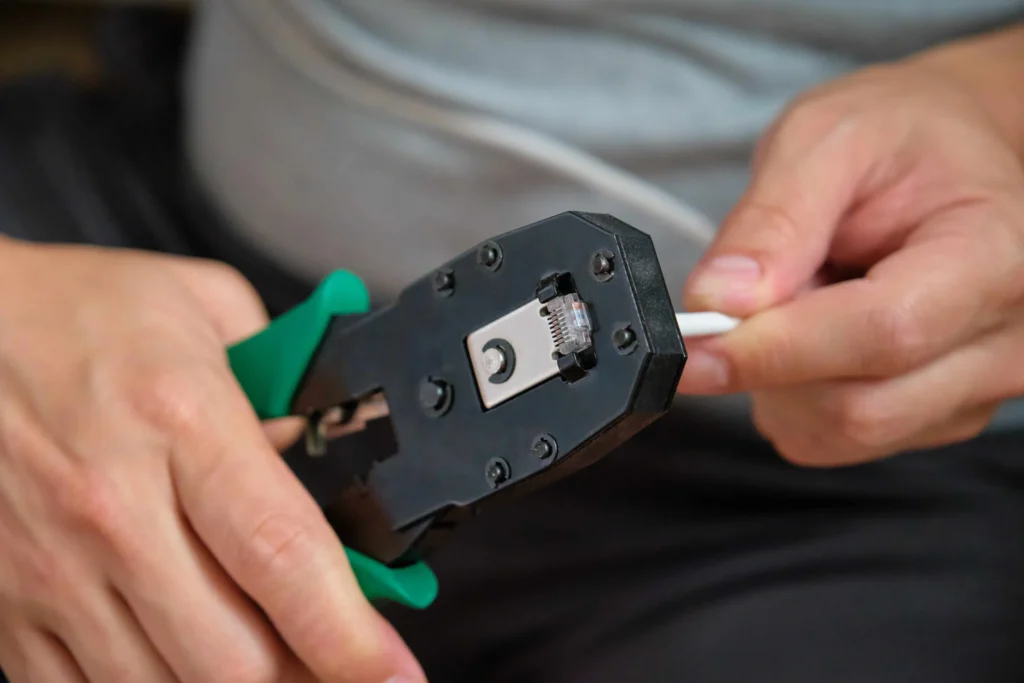
Networking Crimpers focus on RJ45 and RJ11 connectors, essential for Ethernet and phone cables. These tools precisely terminate modular plugs, allowing you to create reliable network links quickly without damaging the delicate pins.
Automotive Crimpers often feature open-barrel designs and can handle weatherproof connectors like Deutsch and Weather Pack. These specialized crimpers ensure strong, vibration-resistant connections that stand up to harsh vehicle environments.
Coaxial Cable Crimpers are tailored for RG59 and RG6 cables, common in TV and broadband installations. They securely attach connectors without crushing the cable shielding, preserving signal quality.
PEX/Plumbing Crimpers use copper rings or stainless steel clamps to create leak-proof seals on plumbing pipes. These crimpers simplify plumbing jobs while ensuring durability under pressure.
Battery and Lug Crimpers are heavy-duty tools designed for large cable lugs and terminals used in power distribution. They deliver the high force needed to form secure, long-lasting electrical connections in demanding setups.
Choosing the right specialized crimping tool for your project is key to achieving safe, precise connections every time.
Key Factors to Consider When Choosing a Crimping Tool
When picking a crimping tool, wire gauge (AWG) compatibility is crucial. Make sure the tool handles the specific wire sizes and connector types you plan to use—whether it’s small electrical terminals or heavy-duty battery lugs. Using the wrong size can lead to weak or unreliable crimps.
The crimp profile and die options also matter. Some tools come with fixed dies designed for one crimp shape, like hexagonal or indent, while others offer interchangeable die crimper systems for more flexibility. Choose based on the variety of connectors you work with and how often you need to switch between them.
Ergonomics and the ratchet mechanism affect comfort and crimp quality. Tools with a ratchet lock in place to deliver consistent pressure, which reduces hand fatigue and ensures professional-grade results. Look for solid build quality too, especially if you’ll use the tool daily.
Consider your application needs: occasional DIY users usually do fine with handheld or manual crimpers, while professionals benefit from ratcheting or hydraulic crimping tools designed for repeated heavy use.
Finally, avoid common mistakes like using mismatched tools for your connectors. A poor fit often means loose crimps or damaged wires, which can cause connection failures. For example, using a standard wire terminal crimper on heavy-duty cable lugs won’t cut it. Always match the right crimping tool to your wire and connector type to get strong, reliable bonds.
For a detailed guide on choosing the right type for your project, check out the comprehensive crimping tool guide and how to choose for more insights.
How to Use a Crimping Tool: Step-by-Step Guide
Using a crimping tool properly makes all the difference in getting a strong, reliable connection. Here’s a simple guide to help you through the process:
1. Preparing Wires
Strip the wire insulation carefully to expose the right length of conductor without damaging the wire strands.
Select the right connector for your wire gauge (AWG) and application. Using the wrong size can cause weak crimps or damage. For example, use insulated or non-insulated terminals specifically designed for your wire type.
2. Proper Insertion and Crimping Technique
Insert the stripped wire fully into the connector barrel. Make sure no strands are loose or outside the barrel.
Place the connector into the correct jaw or die on your crimping tool (manual, ratcheting, or hydraulic). If using an interchangeable die crimper, pick the matching die for your terminal type.
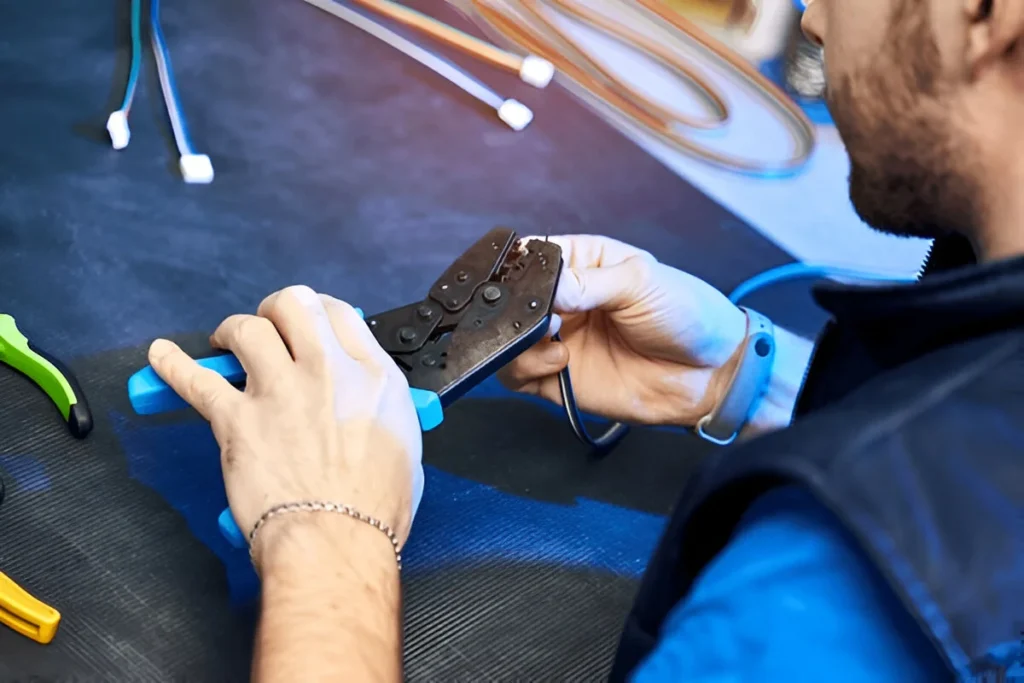
Squeeze the handles firmly and evenly until the crimper’s ratchet releases or the tool completes the crimp cycle. This ensures consistent pressure and a gas-tight seal.
3. Testing Crimps
Perform a pull test to check if the wire is securely locked in the connector—give the wire a firm tug.
Inspect the crimp visually for uniform deformation (hexagonal, oval, or indent shaped depending on your crimp profile). Look for cracks or incomplete crimps that can cause failures.
4. Safety Tips and Maintenance
Always wear safety glasses to protect your eyes from wire strands or debris.
Keep the crimping tool clean and lubricate moving parts regularly for smooth operation.
Check dies and jaws for wear; replace them if they become damaged or worn out to maintain crimp quality.
Store your tool in a dry place to prevent rust and damage.
For more detailed guidance, check out our step-by-step how to crimp wires tutorial, which covers different connector types and tools.
By following these steps, you’ll get solid, professional-grade crimps every time, whether you’re working with electrical terminal tools, network cable crimpers, or heavy-duty battery lug crimpers.
Recommended Crimping Tools from JiaPaiMi
JiaPaiMi offers a solid range of durable, precise crimping tools designed to meet different needs—whether you’re tackling electrical wiring, automotive jobs, or networking cables. Their tools focus on quality, comfort, and versatility.
Top Features:
Feature
Benefit
Ergonomic handles
Reduce hand fatigue during prolonged use
Interchangeable dies
Support multiple crimp profiles and connector types
For smaller connectors like Dupont pins, consider the SN-2549 Dupont crimping tool, designed for precision and repeated use.
Why Choose JiaPaiMi?
Reliable performance across wire terminal crimping, battery lug crimping, and network cable crimping tasks
Tools designed to fit various applications—from DIY to industrial jobs
Quality materials mean long-lasting tools that keep your crimps tight and secure
Choosing the right JiaPaiMi crimper means you get versatile, ergonomic tools that tackle everything from casual repairs to heavy-duty professional projects with confidence and precision.
Frequently Asked Questions
Ratcheting vs. non-ratcheting: which is better?
Ratcheting crimpers are generally better for consistent, professional results. They apply uniform pressure, reducing the chance of weak crimps, which is crucial for reliable electrical and network connections. Non-ratcheting tools are lighter and cheaper but require more skill to get a good crimp. For daily or heavy use, a ratcheting crimper is usually the smarter choice.
Can one tool handle multiple connector types?
Some crimping tools come with interchangeable dies to handle various connectors like insulated terminals, bootlace ferrules, and coaxial cable crimps. However, specialized crimpers—such as automotive wire crimpers or RJ45 crimping tools—are designed for specific tasks and provide better precision. For versatile jobs, look for tools with multiple crimp profiles and die options.
Best practices for automotive or networking crimps Always strip wires properly to avoid damage.
Use the correct crimp profile—open barrel crimps for automotive wires and hex or indent crimps for networking cables.
Apply consistent pressure with a ratcheting crimper to ensure a gas-tight connection.
Verify crimp strength with a pull test before finalizing the installation. Troubleshooting weak connections
Weak crimps often come from using the wrong tool or dies, improper wire stripping, or insufficient pressure. If you notice a loose connection, first check that the crimping tool suits your wire gauge and connector type. Re-crimp with the right tool or consider upgrading to a hydraulic crimping tool for heavy-duty cables. Proper maintenance of your crimper also prevents weak crimps.
Poor electrical connections are among the most frustrating problems electricians encounter, and improper crimping tool technique is often the culprit. Whether you’re working with ratchet crimping tools or standard manual crimpers, mastering the correct crimping technique ensures reliable connections that prevent failures, overheating, and safety hazards. Many professionals unknowingly make critical errors during the crimping […]
If you work with electrical wires, cables, or connectors, a pliers crimping tool quickly becomes your best friend. It looks simple. It feels familiar in your hand. But when used correctly, it can turn loose, unreliable connections into strong, safe, and professional results. In this guide, you will learn what a pliers crimping tool is, […]
When you work with wires every day, one small mistake can cause a big problem. Loose joints, overheated cables, or a connection that fails right when the job is finished—no one wants that. That is exactly why electrical crimping pliers are such an important tool in any electrician’s kit. Used well, they give you strong, […]
We use cookies to enhance your browsing experience, serve personalised ads or content, and analyse our traffic. By clicking "Accept All", you consent to our use of cookies.