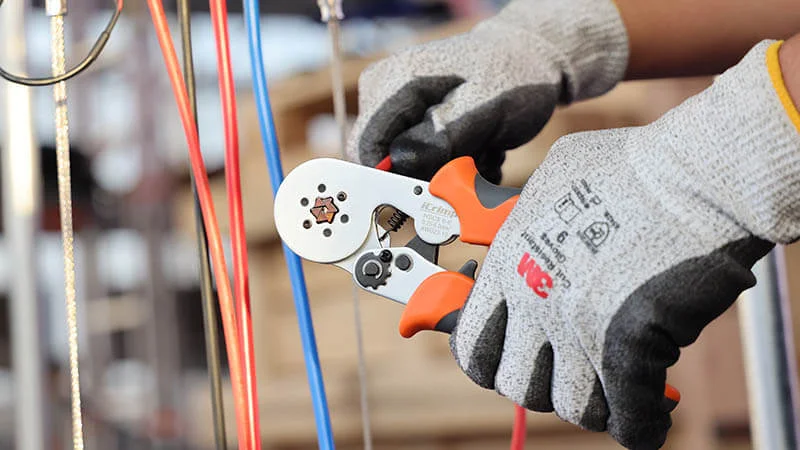
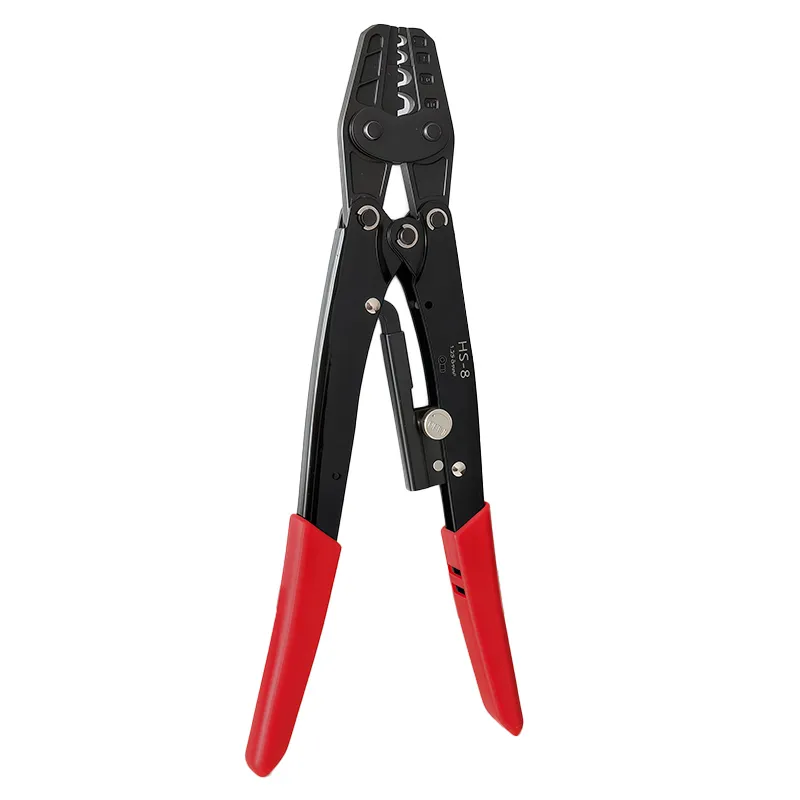
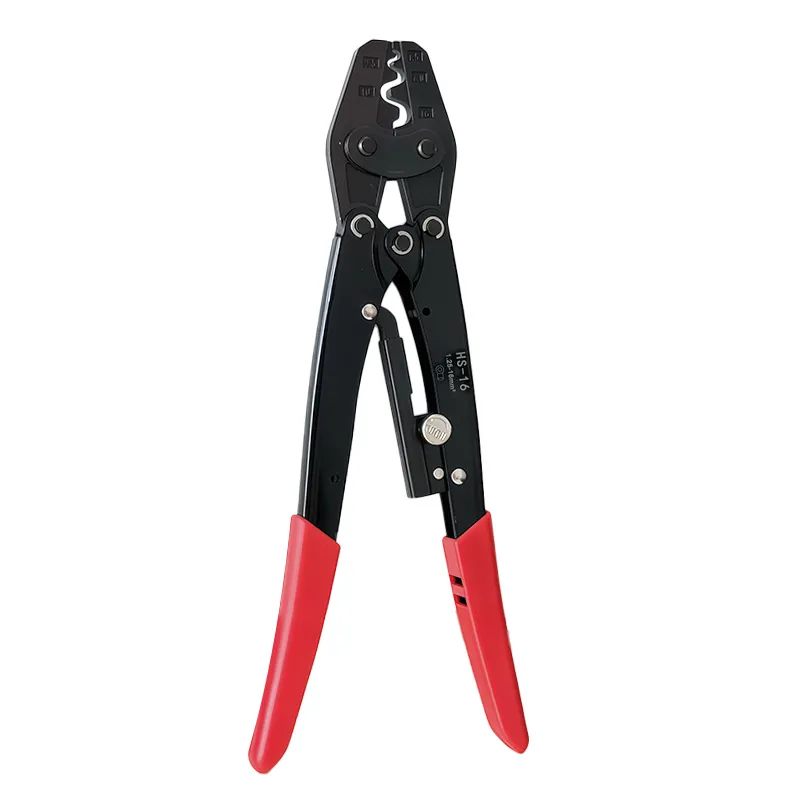
A ratcheting crimping toolis a specialized hand tool designed to securely join wires and terminals by compressing connectors onto cables. Unlike manual crimpers, a ratcheting wire crimper uses a built-in ratchet mechanism to apply consistent pressure throughout the crimping process, ensuring a reliable and uniform connection every time.
How It Works
The tool’s ratchet system controls the closing action, only releasing once the crimp cycle is complete. This “full-cycle ratchet crimper” guarantees that the terminal is properly compressed before the tool opens, reducing the risk of weak crimps. Simply place the wire and terminal in the die, squeeze the handles, and the ratchet locks until the crimp is done, then automatically releases with a quick-release lever for ease of use.
Key Components
Ratcheting Mechanism: Controls the force and completes the full crimp cycle.
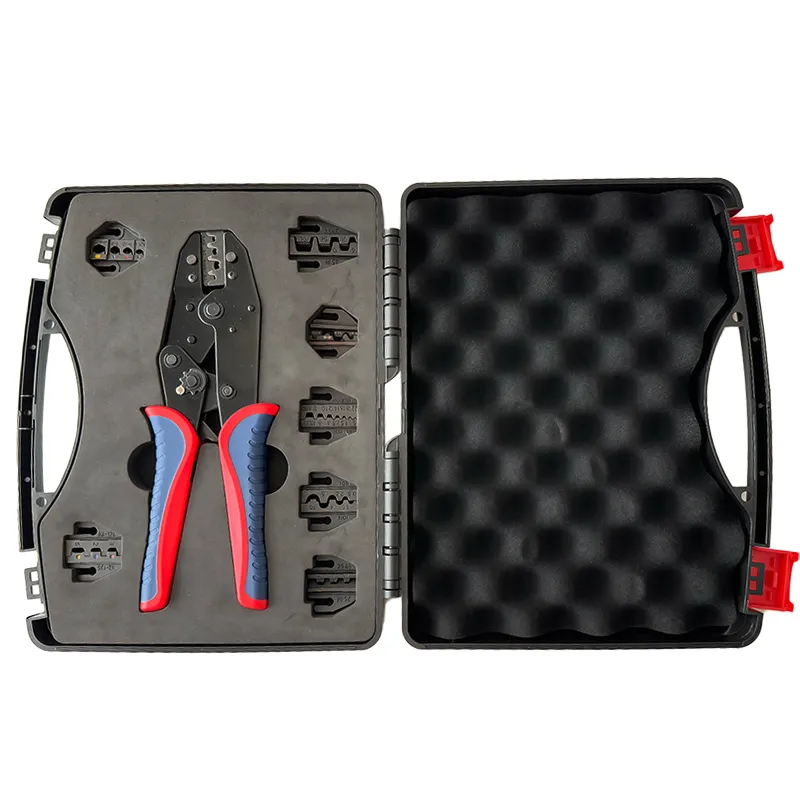
Interchangeable Dies: Allow use with different terminal types such as insulated terminals, non-insulated terminals, or ferrules.
Ergonomic Handles: Provide comfort and reduce user fatigue during repetitive tasks.
Quick-Release Lever: Enables easy opening after each crimp cycle.
Common Applications
Ratcheting crimpers are popular in electrical work, automotive wiring, telecommunications, and industrial maintenance. They excel in tasks like crimping insulated terminal connectors, creating secure wire splices, and working with heat shrink connector tools. For professionals and DIYers alike, this tool ensures precision and durability in every connection.
Ratcheting vs. Non-Ratcheting Crimpers: Why the Ratchet Makes a Difference
When choosing between a ratcheting wire crimper and a traditional non-ratcheting crimper, the ratchet mechanism offers clear advantages—especially for consistent crimps and reducing user fatigue.
Force Consistency and User Fatigue
Ratcheting Crimpers: The ratchet ensures a full-cycle crimp with consistent pressure every time. It locks until the crimp is complete, so you don’t have to guess if the connection is secure. This means less hand strain, especially on repetitive jobs.
Non-Ratcheting Crimpers: These rely more on user strength and technique, which can lead to uneven crimps and more fatigue over time. You need to manually control the pressure applied—making it less reliable for critical or large-scale projects.
Real-World Performance Comparison
Feature
Ratcheting Crimper
Non-Ratcheting Crimper
Crimp Consistency
High (full-cycle ratchet)
Variable (depends on user)
User Fatigue
Low (less hand strain)
Higher (manual force required)
Suitable for Repetitive Work
Ideal
Less suitable
Accuracy on Small AWG
Excellent
Moderate
Price Range
Slightly higher
Generally lower
When to Choose Each Type
Choose Ratcheting Crimpers if you work with insulated terminals regularly, need a professional wire crimping tool for precision, or want to avoid hand fatigue during heavy tasks. A ratchet crimper also works well with interchangeable die kits for versatility.
Choose Non-Ratcheting Crimpers if you’re doing light, occasional work or handling non-insulated terminals where precision is less critical and budget is tight.
Comfortable grips reduce user fatigue, especially if you crimp wires frequently.
Look for ergonomic ratchet crimpers with soft handles and proper weight balance.
Adjustable crimping force settings help tailor the tool to different wire gauges and terminal sizes.
Build Quality and Accessories
High-carbon steel or hardened tool steel ensures durability and long life.
Accessories like spare dies, carrying cases, or calibration tools add value and convenience.
Quality build also means you get clean crimps without deforming terminals or damaging wires.
Feature
Why It Matters
What to Look For
Ratchet mechanism
Consistent, full crimps
Reliable ratchet with auto-release
Die compatibility
Versatility across terminals
Interchangeable or multiple dies
Ergonomic design
Less fatigue during use
Soft grips, balanced handles
Adjustable crimp force
Precise crimps for different sizes
Easily adjustable settings
Build quality
Durability and accuracy
Hardened steel, quality finishes
Accessories
Convenience and versatility
Spare dies, cases, tools
Choosing a quality ratcheting wire crimper with these features takes the guesswork out of your wiring jobs, ensuring professional and reliable connections every time. Consider tools like the HS-8 ratchet crimping tool for non-insulated terminals for additional options depending on your terminal type needs.
Types of Ratcheting Crimping Tools
Ratcheting crimping tools come in several types, each designed for specific needs and applications:
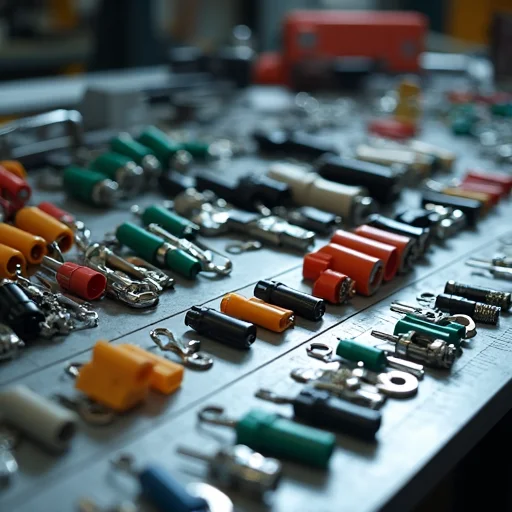
Single-purpose insulated terminal crimpers: These tools focus on crimping insulated terminals and heat shrink connectors. They ensure a secure connection with consistent pressure, making them ideal for electrical work involving insulated wires. For example, a quality insulated terminal crimper like the HS-125 ratchet crimping tool excels in making reliable crimps for heat shrink connectors.
Multi-die kits for versatility: These include interchangeable dies allowing you to crimp various terminal types, from insulated and non-insulated to ferrules and open barrel connectors. A multi-die ratcheting wire crimper is perfect if you work on different electrical projects and need one tool to handle multiple terminal sizes and styles.
Heavy-duty and specialty models: Built for tougher jobs like automotive wiring, large gauge cables, or specialized terminals, these ratchet crimpers offer higher crimping force and durable construction. Specialty tools might also include features like adjustable crimping force and quick-release levers for easier use in demanding conditions.
Choosing the right type of ratcheting crimping tool depends on your work scope and the kinds of terminals you use most often. Whether you need a precise insulated terminal crimper or a rugged tool for heavy cables, understanding these types helps you pick the tool that fits your needs best.
How to Use a Ratcheting Crimping Tool Properly
Using a ratcheting crimping tool right is key to getting clean, reliable crimps every time. Here’s a simple step-by-step guide to help you out:
Step-by-Step Usage Guide
Select the right die for your terminal type and wire size (AWG). Many ratcheting wire crimpers have interchangeable dies—make sure they match the terminal you’re using.
Strip the wire carefully, exposing just enough conductor to fit inside the terminal without any excess exposed wire.
Insert the terminal into the crimping die, ensuring it’s properly positioned for an even crimp.
Place the stripped wire into the terminal barrel, pushing it in fully.
Squeeze the handles firmly until the ratchet mechanism completes a full cycle. The ratchet ensures consistent force, so don’t release early.
Release the tool using the quick-release lever if present, and check your crimp for tightness.
Tips for Perfect Crimps
Use a full-cycle ratchet crimper to guarantee consistent pressure for every crimp.
Match the crimping tool to the connector type—insulated terminal crimpers need different dies than ferrule crimping pliers or open barrel crimpers.
Keep your hand steady and avoid twisting the wire or connector during crimping.
Double-check with a pull test if possible to ensure the crimp holds strong.
Common Mistakes to Avoid
Using the wrong die size or terminal type can lead to weak crimps or terminal damage.
Stripping too much or too little wire can cause poor electrical connections or exposed bare wire.
Releasing the ratchet too soon can result in an incomplete crimp.
Applying excessive force on non-ratcheting crimpers causes uneven results and hand fatigue.
Maintenance Advice
Keep your ratcheting crimper clean and free of debris—dirt can affect the ratchet mechanism.
Regularly lubricate pivot points with a light machine oil.
Store the tool in a dry place to avoid rust or corrosion on dies and handles.
Periodically check the ratchet function and dies for wear, especially if you crimp frequently.
For a detailed step-by-step guide tailored to JiaPaiMi ratcheting crimping tools, you can visit this comprehensive wire crimping step-by-step guide. Following these tips will maximize the lifespan of your tool and ensure professional-quality crimps every time.
Best Ratcheting Crimping Tools in 2026: Reviews and Recommendations
When choosing the best ratcheting crimping tool in 2026, I focus on key criteria like build quality, ratchet mechanism reliability, die compatibility, and ergonomic design. User feedback consistently highlights tools that offer consistent crimp force with minimal fatigue, versatile die options, and smooth auto-release features.
Top Picks with Pros and Cons
Tool Model
Pros
Cons
JiaPaiMi Ratcheting Wire Crimper
Durable build, precise ratchet action, ergonomic handles, interchangeable dies
Slightly higher price point
SN-68B Ratchet Crimping Tool
Great for Dupont connectors, quick-release lever, affordable
Limited die options
SN-48B Spade/Tab Terminal Crimper
Perfect for insulated terminal crimps, solid grip, adjustable force
Best for specific terminals only
SN-2549 Dupont Crimping Tool
Professional-grade, full-cycle ratchet crimper, good for AWG wire sizes
Bulkier than other models
JiaPaiMi stands out for its professional wire crimping tool design, combining a full-cycle ratchet with adjustable crimping force. Its ergonomic ratchet crimper handle means less hand strain during long jobs, great for both electric and automotive uses. Plus, the interchangeable die system supports insulated, non-insulated terminals, and even heat shrink connector crimps — a real all-rounder.
For example, if you’re working a lot with Dupont connectors, the SN-68B ratchet crimping tool for Dupont is a solid budget-friendly choice that’s easy to operate and reliable.
Why JiaPaiMi?
Durability: High-quality steel and precision manufacturing mean it lasts.
Versatility: Interchangeable dies cover a wide range of terminal types including ferrules and open barrel crimps.
Comfort: Ergonomic grips reduce user fatigue, perfect for professionals and DIYers alike.
Precision: The ratchet mechanism ensures consistent crimps, preventing under or over-crimping.
When picking a ratcheting wire crimper, balance your needs between specialized single-use tools and versatile multi-die kits like JiaPaiMi’s. Their tool kits often come with neat storage cases and easy-to-change dies, helping you maximize efficiency on the job.
In , for 2026, JiaPaiMi’s ratcheting crimping tools offer the best mix of quality, ergonomics, and versatility. Whether you’re dealing with automotive wiring, electrical terminals, or heat shrink connectors, these tools deliver reliable performance in a user-friendly package.
Frequently Asked Questions about Ratcheting Crimping Tools
Is a ratcheting crimping tool worth the extra cost?
Absolutely. While ratcheting wire crimpers tend to cost more upfront than manual crimpers, they offer consistent crimping force and reduce user fatigue. This makes them a smart investment for professionals and regular users who need reliable, uniform crimps every time.
How do I adjust the crimping force?
Many quality ratcheting crimpers come with an adjustable crimping force feature. You can usually find a dial or screw mechanism on the tool. Adjusting it to match the wire gauge (AWG) and terminal type ensures a strong, damage-free crimp. Always refer to the tool’s manual for exact instructions.
Can ratcheting crimpers be used with heat shrink connectors?
Yes, most insulated terminal crimpers, including those with a full-cycle ratchet mechanism, work well with heat shrink connectors. Proper crimping combined with heat shrink tubing offers excellent electrical insulation and mechanical protection. For safety tips and techniques, you might want to check out our heat shrink insulated terminals crimping safety guide.
What’s the difference between crimping for automotive vs electrical work?
Automotive crimping often requires tools compatible with specialized terminals and sometimes higher durability for vibration resistance. Electrical crimpers focus on precise connection for household wiring and electronics, often supporting a wider range of terminal types. Choosing a multi-die ratchet crimper or a model specifically designed for your application ensures the best results.
Introduction: Understanding Wire Terminal AWG Specifications Electrical professionals, procurement engineers, and equipment manufacturers depend on precise wire terminal AWG specifications to ensure safe, reliable connections across industrial applications. The American Wire Gauge (AWG) system, standardized since 1857 according to Wikipedia’s comprehensive guide, establishes critical parameters for wire diameter, cross-sectional area, and current-carrying capacity. However, selecting […]
Crimping is a widely used method for joining electrical wires to connectors or splicing wires without soldering. How to crimp wires is a commonly used method, It’s a simple technique that ensures a solid connection, whether you’re linking two wires or attaching a wire to a connector. The strength of the connection depends on how […]
When you work with wires every day, one small mistake can cause a big problem. Loose joints, overheated cables, or a connection that fails right when the job is finished—no one wants that. That is exactly why electrical crimping pliers are such an important tool in any electrician’s kit. Used well, they give you strong, […]
We use cookies to enhance your browsing experience, serve personalised ads or content, and analyse our traffic. By clicking "Accept All", you consent to our use of cookies.