Introduction: Choosing the Right Crimping Tool Type
Professional electricians face a critical decision when equipping their toolkit: which electrical crimping tool types should they invest in? According to the IEC 60364 standard for electrical installations, proper terminal crimping directly impacts system reliability and safety. However, not all crimping tools are created equal. Different applications demand specific crimping tool designs, from ratchet crimpers for standard terminals to specialized ferrule crimpers for industrial control panels. This comprehensive guide categorizes the 5 primary crimping tool types used by electricians worldwide, explaining their unique applications, advantages, and selection criteria to help you build a well-rounded crimping toolkit.
Type 1: Ratchet Crimping Tools – The Industry Workhorse
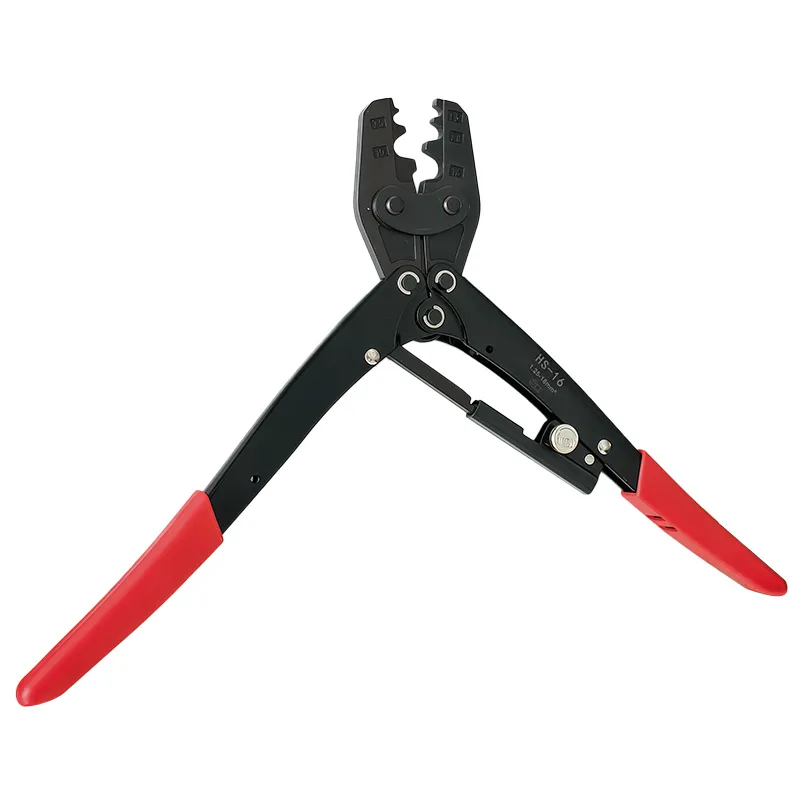
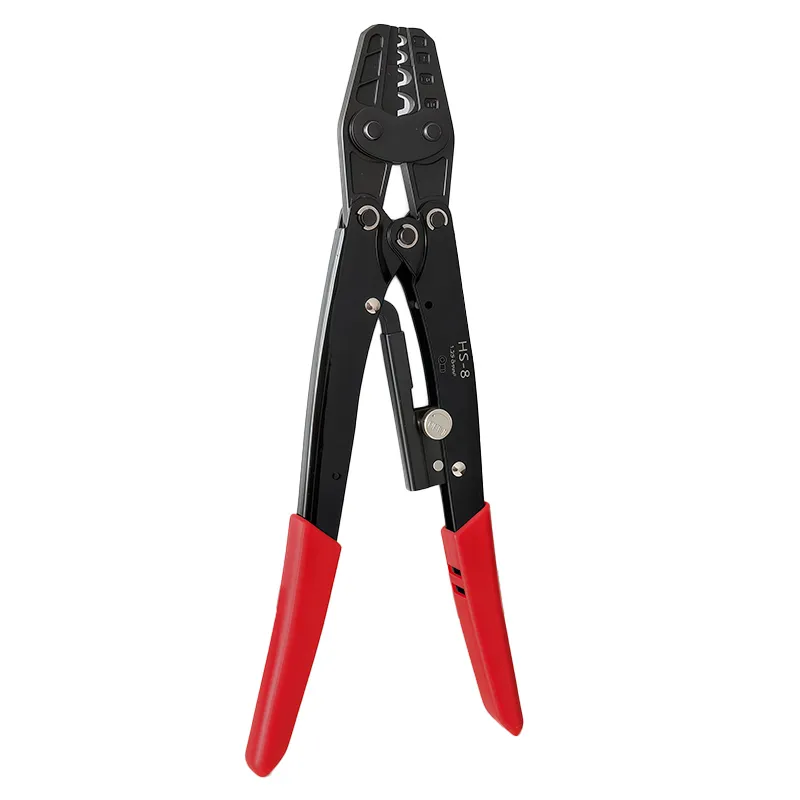
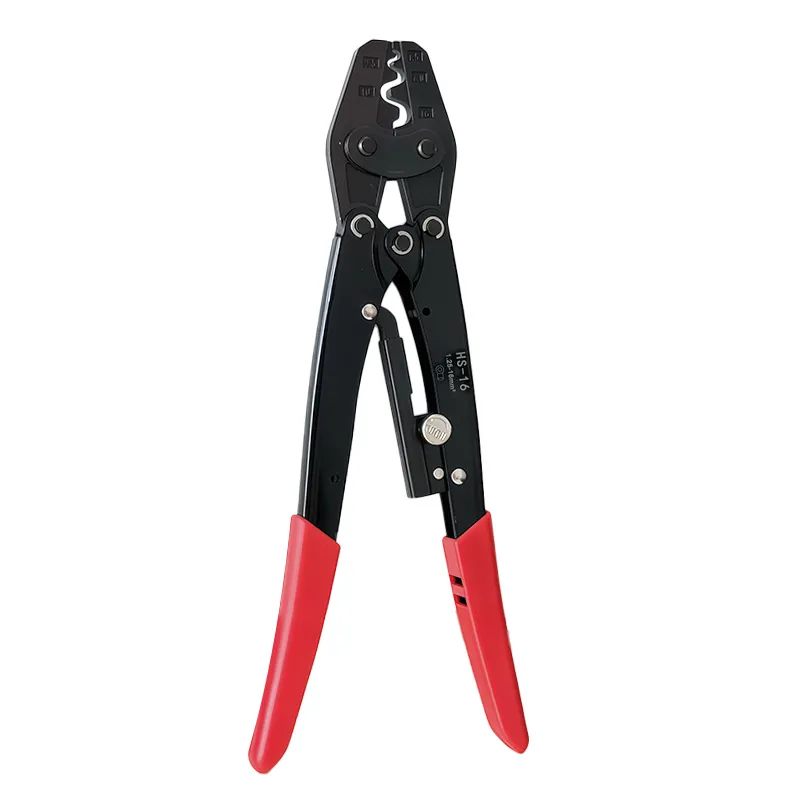
Ratchet crimpers represent the most versatile and widely-used electrical crimping tool types in professional installations. These self-adjusting tools feature an automatic release mechanism that prevents over-crimping and ensures consistent compression pressure across varying wire gauges—typically ranging from 0.5mm² to 10mm².
Key Advantages:
Foolproof ratchet mechanism prevents excessive crushing force
Works with insulated terminals (OT, UT, SC connectors)
Color-coded handles indicate AWG/mm² capability
Suitable for residential and light commercial work
Cost-effective for electrician apprentices and DIY users
Common Applications:
Household electrical wiring (14-16 AWG)
Automotive dash harnesses
Equipment control circuits
Standard terminal installations
The ratchet design’s popularity stems from its ability to maintain consistent crimp quality without requiring user judgment on pressure settings. According to Wikipedia’s detailed guide on electrical safety standards, proper terminal compression is fundamental to preventing contact resistance failures.
Type 2: Ferrule Crimpers – Industrial Control Systems
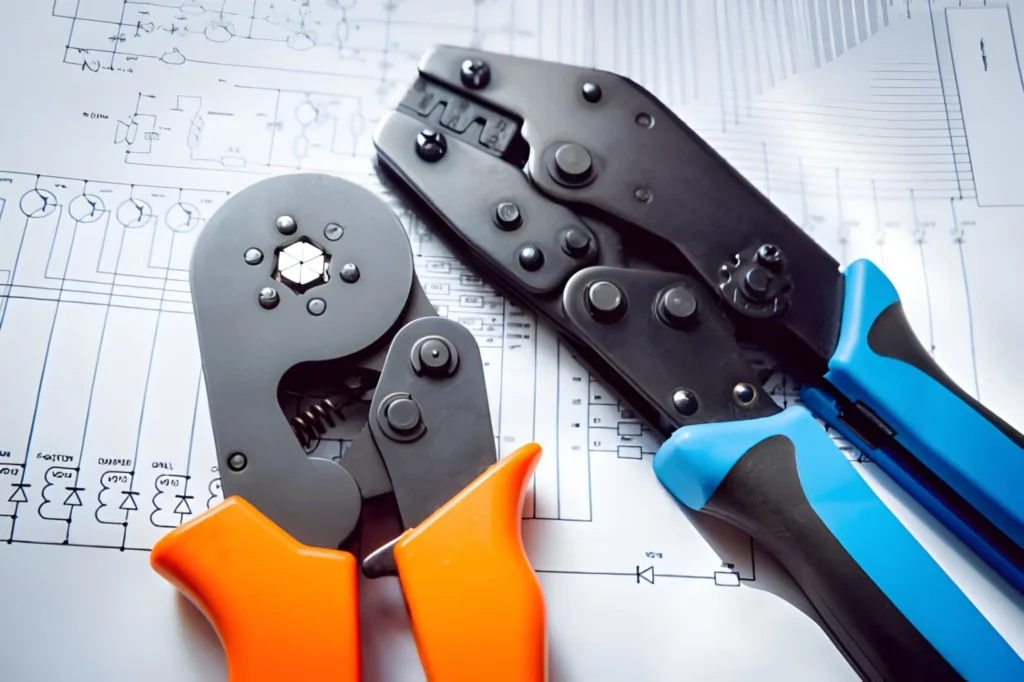
Ferrule terminals (tube-pin connectors, 0.08-16mm²) demand specialized electrical crimping tool types designed specifically for European-style industrial applications. Ferrule crimpers apply concentrated force over a smaller contact area than ratchet tools, creating mechanical interlock connections suitable for DIN rail terminal blocks, control panel wiring, and PLC systems.
Technical Specifications:
Hexagonal or square-shaped die cavities produce precise compression patterns
Barrel compression depth: typically 2.5-3.5mm for 0.5mm² ferrules
No ratchet mechanism—requires operator pressure judgment
Compatible with insulated and non-insulated ferrule terminals
Operating range: 0.08mm² to 35mm² (specialized models)
Per IEC 60364 low-voltage electrical installation standards, ferrule terminal crimping must achieve minimum 15 lbs pull-out force for small gauges and 35 lbs for larger conductors. This demanding requirement necessitates precise tool calibration and operator training—factors that distinguish ferrule crimpers from casual-use ratchet tools.
Type 3: MC4 Solar PV Crimpers – Renewable Energy Specialist
Renewable energy installations introduced specialized electrical crimping tool types designed exclusively for MC4 (Multi-Contact) solar panel connectors. These crimp-and-twist connectors carry 15-30 amperes in outdoor photovoltaic arrays and demand environmental sealing that standard ratchet tools cannot provide.
MC4 Crimper Specifications:
Single-die design for 2.5mm², 4mm², and 6mm² conductor sizes
Integrated wire stripper removes insulation without conductor scoring
Color-coded jaws prevent cross-contamination between wire gauges
Creates conical compression for weathertight connections
Designed for 20+ year outdoor UV exposure resistance
Why Separate Tools Matter: MC4 connectors use proprietary barrel geometries that differ fundamentally from standard OT/UT terminals. Standard ratchet crimpers risk:
Inadequate sealing, leading to moisture ingress
Loose connections causing intermittent power failures
Corrosion within female contact housings
Potential fire hazards in array junction boxes
The NFPA 70E workplace electrical safety standard emphasizes that specialized tools prevent the arc-flash incidents common in high-impedance connections where solar installers previously used improvised crimping methods.
Type 4: Ferrule Crimpers for Coaxial Cable – RF/Microwave Applications
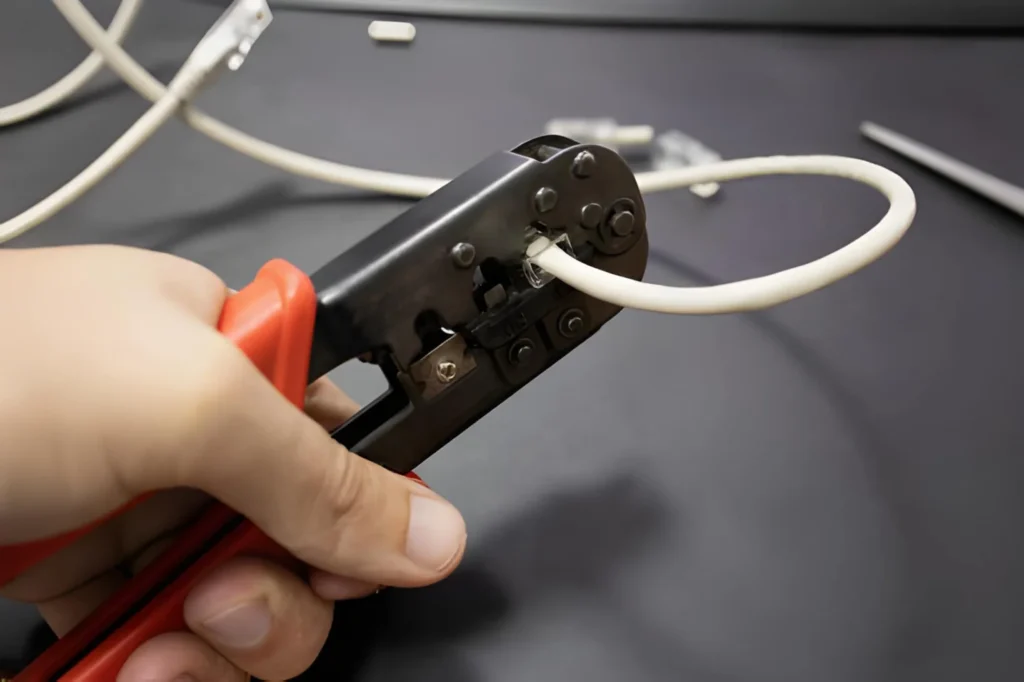
High-frequency applications demand RF coaxial electrical crimping tool types that maintain impedance matching and prevent signal degradation. These precision instruments crimp coaxial connector bodies (BNC, Type N, SMA) to shielded cable, preserving 50-75 ohm impedance specifications critical to signal integrity.
Technical Precision Requirements:
Compression force: ±5% tolerance across 100+ crimping cycles
Jaw alignment precision: <0.05mm deviation
Crimp depth consistency: ±0.1mm maximum variation
Compatible cable gauges: typically 1.0-4.5mm outer diameter
Professional Applications:
Surveillance system installations (BNC-terminated camera feeds)
RF test equipment wiring
Cable TV distribution networks
Wireless base station antenna cables
Amateur radio installations
Unlike standard terminal crimpers where minor variations remain inconsequential, RF coaxial connections fail catastrophically under impedance mismatch conditions. A 0.5mm depth deviation can increase return loss by 3-5dB, cascading into system-wide signal attenuation.
Type 5: Specialized Crimpers – Dupont Connectors, PEX Clamps, and Aviation Systems
Professional electricians occasionally encounter specialized electrical crimping tool types designed for niche applications beyond standard terminal crimping. These include:
Precision adjustment for preventing pin extrusion or under-compression
Common in programmable controller wiring and automation panels
Requires magnification for proper visual alignment
PEX Clamp Release Tools (HVAC/Plumbing)
Specialized for cinching stainless steel clamps on radiant heating tubes
Mechanical advantage through scissor-handle design
Common in commercial HVAC system installation
Crossover application from plumbing industry
Aviation Precision Crimpers (MIL-SPEC Aerospace)
Tolerances tighter than ±0.01mm for avionics wiring
Designed to MS23142 military specifications
Used in commercial aircraft systems and high-reliability defense applications
Selecting Your Electrical Crimping Tool Kit
For Electrician Beginners: Start with 3-4 ratchet crimpers covering 0.5mm²-10mm² ranges plus one ferrule crimper for industrial exposure.
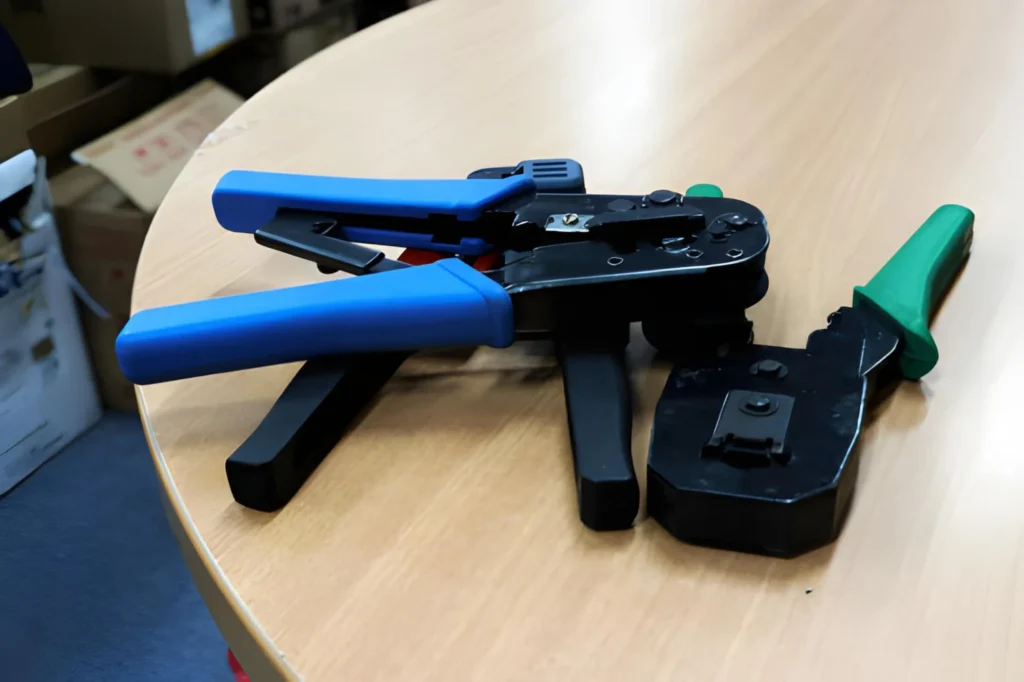
For Commercial/Industrial Professionals: Invest in modular systems featuring interchangeable jaws to support ratchet, ferrule, and specialized applications while minimizing storage footprint.
For Solar/Renewable Installers: Dedicated MC4 crimpers are non-negotiable—attempting to use ratchet tools guarantees connection failures in 18-36 months despite initial appearance of acceptable crimps.
Quality Criteria:
ISO 9001-certified manufacturer with documented pull-out force testing
High-carbon steel construction (60+ HRC hardness) for consistency
Die calibration certificates for professional applications
2+ year warranty covering mechanical wear
Conclusion: Match Tools to Applications
Understanding distinct electrical crimping tool types and their specialized applications prevents costly installation failures, safety violations, and warranty claims. Professional electricians who invest in application-specific tools consistently achieve superior connection reliability compared to technicians attempting to force single-purpose tools across incompatible terminals. Whether crimping standard OT terminals, industrial ferrule connectors, or outdoor MC4 solar junctions, selecting the correct tool classification ensures code compliance, customer confidence, and long-term system reliability.
Ready to upgrade your crimping toolkit? Compare application-specific recommendations in our dedicated guides and source quality tools matching professional standards.
Wire Crimping Tools are essential for forming strong, reliable electrical connections. In this guide, we’ll explain how to choose the right tool for different terminals and applications, helping you work faster and with greater confidence. What is a Wire Crimping Tools? A wire crimping tools is used in electrical work to join two wires or […]
Look inside any control panel, car, boat, or solar system and you will see one thing in common: a lot of wires. Every one of those wires needs a safe, solid connection. That is exactly where wire crimping pliers make a huge difference. For installers and technicians, the right crimping tool means fewer failures and faster jobs. For buyers and tool brands, it means fewer complaints, fewer returns, […]
If you work on control panels, machine wiring, automotive harnesses, or serious DIY projects, a good ratchet crimp tool can quietly make or break your day. When crimps are consistent, your terminations pass inspection, panels stay stable, and you stop chasing “mystery” intermittent faults at 10 p.m. on a Friday. In this guide, we will […]
We use cookies to enhance your browsing experience, serve personalised ads or content, and analyse our traffic. By clicking "Accept All", you consent to our use of cookies.