Blog
Best Ratcheting Crimping Tool Features Benefits and Top Picks
Discover the best ratcheting crimping tool with adjustable force ergonomic design and durable steel for precise insulated and heat shrink connector crimps.
Read More
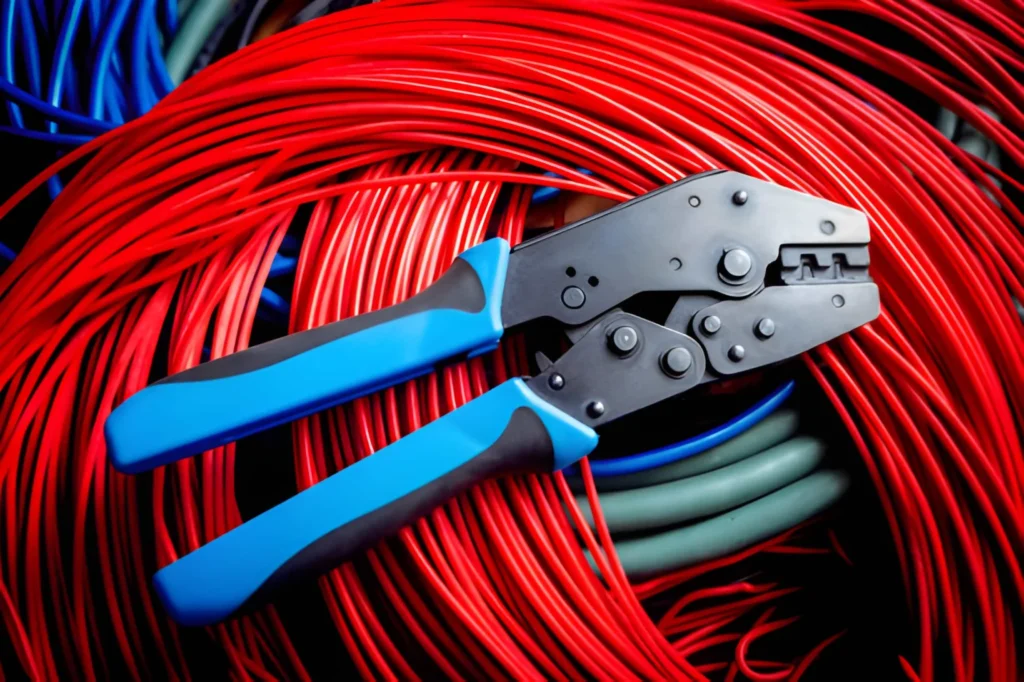
If you work with cables and terminals every day, your ratcheting crimper is one of those tools that can quietly make or break your job. A good crimper gives you repeatable, low‑resistance joints. A bad one gives you hot spots, loose connections, and mysterious downtime.
Have you ever finished a wiring job, only to find a terminal pulling off the wire during testing? That is usually not the wire’s fault. It is the crimp. And very often, it is the crimping tool.
In this guide, we will walk through what a ratcheting crimper is, how it works, main types, and how to choose the right model for your applications. Along the way, you will see examples from control panels, machinery, automotive wiring, and building installations, plus practical tips and common mistakes to avoid.
By the end, you will know exactly what to look for in a ratcheting crimper, and you will be ready to specify it in your next project—or send a quick inquiry to your preferred supplier.
A ratcheting crimper is a hand or powered crimping tool with a built‑in ratchet mechanism that controls and completes the crimping cycle. Unlike simple plier‑type crimpers, a ratcheting wire crimper will not release the connector until the full crimp force is applied. This ensures consistent compression every time.
Inside the handles, a toothed ratchet engages when you squeeze. As you close the tool, the dies compress the terminal barrel onto the conductor in one or more profiles (for example, “W” crimp for cable lugs or “B” crimp for insulated terminals). The ratchet only releases after reaching a pre‑set pressure, so the operator cannot “under‑crimp” by stopping halfway.
From an engineering point of view, this matters for:
If you have ever wondered how to use a ratcheting crimper correctly: insert the stripped wire into the terminal barrel first, then place the terminal into the die, fully seat it, and only then squeeze the handles through the full stroke until the ratchet releases with a click. Partial strokes are not your friend here.
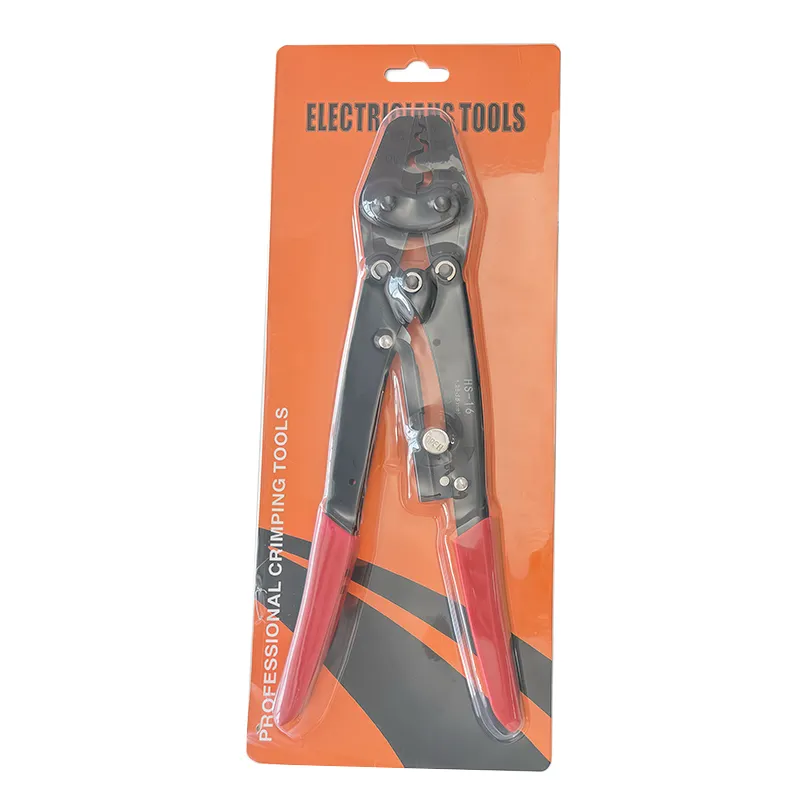
A ratcheting crimper for insulated terminals gives consistent compression without cutting into the plastic sleeve, which is hard to achieve with simple pliers.
| Feature | Simple crimping pliers | Ratcheting crimper |
|---|---|---|
| Release before full crimp | Yes | No |
| Crimp force consistency | Operator‑dependent | Mechanism‑controlled |
| Suitable for high volume | Limited | Yes |
| Risk of under‑crimp | High | Low |
| Typical use | Occasional DIY | Professional / frequent use |
Not all ratcheting crimpers are the same. If you choose only by price or color of the handles, you will probably regret it halfway through your first cable loom.
At a high level, ratcheting crimper vs crimping tools usually means comparing purpose‑built ratcheting models to generic, non‑ratcheting pliers. Within ratcheting tools themselves, there are several main categories.
These heavy‑duty tools are designed for non‑insulated copper or aluminum cable lugs and sleeves, usually from around 6 mm26\ \text{mm}^26 mm2 up to 120 mm2120\ \text{mm}^2120 mm2 or more. Many models use hexagonal, indent, or “W”‑shaped dies to meet utility and industrial standards.
Typical use cases:
Look for ratchet crimping pliers for cable lugs that clearly indicate the cross‑section range on the head or dies, and match it to your cable sizes and lug specifications.
These are the classic electrician’s tools for red/blue/yellow pre‑insulated terminals, often covering wire sizes from 0.5 mm20.5\ \text{mm}^20.5 mm2 to 6 mm26\ \text{mm}^26 mm2 (AWG 20–10). The die profiles are shaped to compress the metal barrel while supporting, but not damaging, the PVC or nylon sleeve.
You will see them everywhere:
Using the wrong crimper here is a recipe for crushed insulation, cut strands, or loose terminals that heat up under load.
Ferrule crimpers are specialized ratcheting tools for wire end sleeves, typically used in control cabinets, PLC wiring, and terminal blocks. They commonly crimp square or hexagonal profiles from around 0.14 mm20.14\ \text{mm}^20.14 mm2 to 10 mm210\ \text{mm}^210 mm2, sometimes more.
Why they matter:
For maintenance teams and field service, a flexible ratcheting crimper with interchangeable dies can handle:
These are ideal when you need one tool in a service vehicle, but check carefully that each die set is approved for your connector system.
| Type | Typical wire range | Common applications |
|---|---|---|
| Ratcheting pliers for cable lugs | 6–120 mm² | Power cables, motors, busbars |
| Crimper for insulated terminals | 0.5–6 mm² (AWG 20–10) | Building wiring, machinery control circuits |
| Ferrule (end‑sleeve) ratchet crimper | 0.14–10 mm² | Control panels, PLC I/O, terminal blocks |
| Interchangeable‑die ratchet crimper | Varies by die set | Field service, mixed connector types |
If you are planning a new machine or panel project, this is usually the moment to talk with your supplier about which specific ratcheting crimper models fit your terminal brands and standards.
So, how do you decide which ratcheting crimper to buy for your team? It is not only about “will it close the terminal”. For industrial or frequent use, a few parameters make the difference between a tool you trust and a tool that quietly ruins your QA statistics.
Start with the basics: what conductor cross‑sections and terminal families will you crimp daily?
If your crimper lists 0.5–6 mm² but your design includes 10 mm² motor leads, you already know the answer: you need an additional tool.
Many terminal and connector manufacturers test and certify specific crimping tools to meet pull‑out force, resistance, and safety criteria. For demanding applications—like automotive, rail, or industrial machinery shipped worldwide—this can be critical.
Ask questions such as:
A generic ratcheting crimper might work mechanically, but for certified harnesses or exported control panels, “might” is not good enough.
If you or your team crimp all day long, handle design matters more than most buyers expect.
Consider:
In a 500‑connection control cabinet, a comfortable ratcheting crimper for insulated terminals is not a luxury—it is a productivity tool.
Quality ratchet crimpers often include a force adjustment screw or wheel. This lets you fine‑tune the closing force to compensate for tool wear, terminal tolerances, or specific application needs.
Look for:
For purchasing teams, asking your supplier about calibration procedures is a quick way to see whether the tool is designed for serious industrial use.
Working in a clean panel‑building shop is not the same as working in an oily, dusty maintenance area.
Consider:
If you maintain equipment in steel mills, wastewater plants, or offshore platforms, you already know what rough conditions can do to cheap tools.
| Selection factor | What to check in specs or samples |
|---|---|
| Wire size / AWG range | Covers all planned conductors without forcing or “double crimping” |
| Terminal compatibility | Matches your terminal brand, type, and approvals |
| Ergonomics | Comfortable grip, reasonable hand force, suitable tool weight |
| Adjustability | Ratchet force adjustment and clear instructions |
| Durability | Robust construction, corrosion protection, spare part options |
If you are planning a new project or updating workshop tools, you can always contact a technical sales team, share your wire and terminal list, and ask for a recommended ratcheting crimper configuration based on your standards.
Even the best ratcheting crimper cannot fix poor practices. Many connection failures seen during commissioning or maintenance trace back to a few very avoidable mistakes.
Using a die meant for 2.5 mm² on a 1.5 mm² wire looks “close enough” until you do a pull test or see heating in a loaded circuit.
How to avoid it:
Too much bare conductor leaves exposed copper at the back of the terminal, inviting short circuits or corrosion. Too little stripped length leaves part of the barrel unfilled, reducing pull‑out strength.
Practical tip:
Have you ever tried to “save time” by not fully closing the handles? On a ratcheting tool, this simply produces a weak, under‑compressed crimp.
Avoid it by:
This is where how to use ratcheting crimper training really pays off—especially with new technicians or DIY users upgrading from cheap pliers.
Using a ratcheting crimper on a terminal whose insulation is already split, hardened, or not rated for your cable size leads to poor support and potential conductor exposure.
Instead:
Over time, dirt, metal dust, and wear in the ratchet or pivot points change how the tool behaves. In production environments, this can slowly degrade crimp quality.
Simple preventive measures:
Once you have selected the right ratcheting crimper, a few daily habits can keep your crimps—and your tool—reliable in real‑world conditions.
| Area | Practical tip |
|---|---|
| Control panels | Group similar crimps to reduce tool changes and improve workflow |
| Automotive | Use sealed terminals and correct dies for harsh environments |
| Building sites | Respect local codes on wire sizes and terminal types |
| Tool care | Clean and lightly oil joints; store dry; track calibration or replacement |
A ratcheting crimper looks like a simple hand tool, but in reality it sits at the heart of your electrical reliability. Whether you wire control panels, assemble machinery harnesses, build automotive looms, or maintain building installations, the tool you choose directly affects contact resistance, mechanical strength, and long‑term safety.
By matching wire sizes, terminal types, and standards, and by paying attention to ergonomics, adjustability, and durability, you turn crimping into a controlled process instead of a guessing game. Combine the right tool with good practices—correct strip length, full ratchet cycles, regular tool care—and your connections will survive vibration, temperature cycles, and long hours of operation.
If you are planning a new project, upgrading your workshop tools, or just comparing ratcheting crimper vs crimping tools for your team, now is a great time to review your requirements and talk with a specialist supplier.
Here are a few short CTAs you can adapt:
Suggested image alt texts for real application scenes:
The ratchet mechanism controls the crimping cycle and only releases after reaching a preset force. This means every crimp receives approximately the same compression, independent of operator strength. For industrial wiring, this improves pull‑out strength and reduces the risk of loose or overheated connections compared with basic pliers that can be stopped halfway.
In practice, no. A single ratcheting crimper can cover a defined range—say 0.5–6 mm² insulated terminals or 6–50 mm² cable lugs—but trying to use it outside its specified range leads to weak crimps or damaged terminals. For professional work, most shops keep at least one tool for small control wires and ferrules, and another for larger power cable lugs.
The interval depends on usage and quality requirements. In ISO‑certified production, tools are often checked every 6–12 months using sample crimps and pull tests. For maintenance teams, a good practice is to inspect tools visually every few months and run a quick pull test whenever you notice unusual feel or visible wear. When in doubt, consult the manufacturer’s recommendations.
Yes, a ratcheting wire crimper can be an excellent upgrade for serious DIY hobbyists, especially for automotive projects, solar systems, or home workshops. It adds consistency and safety compared with cheap plier‑type tools. The key is to choose a model that matches your typical wire sizes and terminal types and to read the instructions on how to use ratcheting crimper correctly.
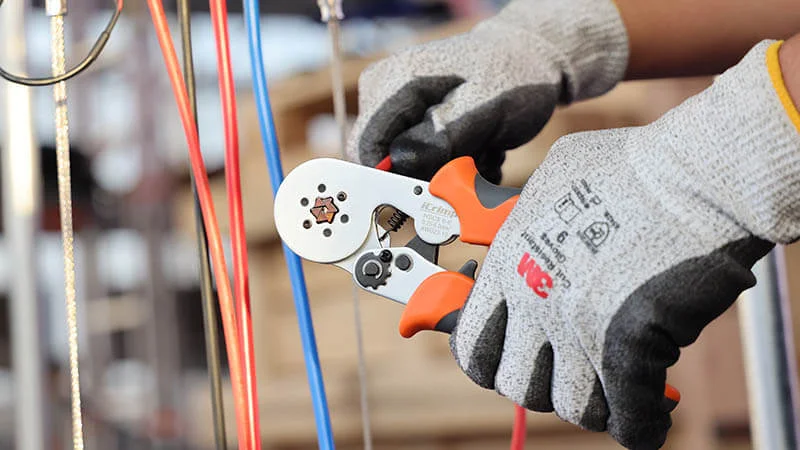
Discover the best ratcheting crimping tool with adjustable force ergonomic design and durable steel for precise insulated and heat shrink connector crimps.
Read More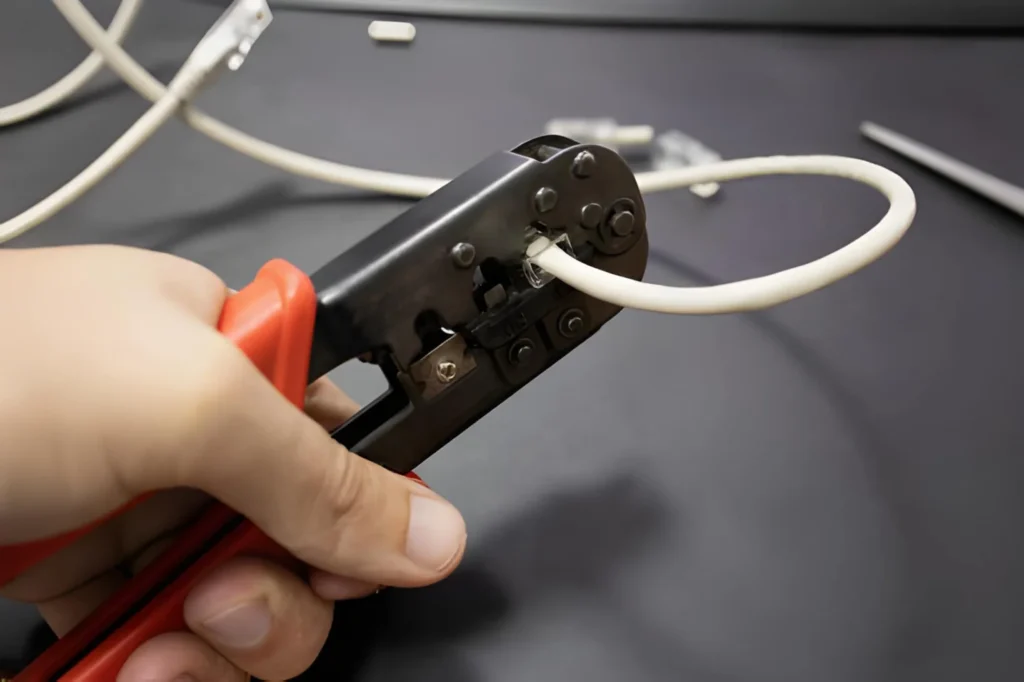
Learn how to use wire crimpers with step-by-step tips for secure electrical connections using ratcheting crimpers and quality connectors.
Read More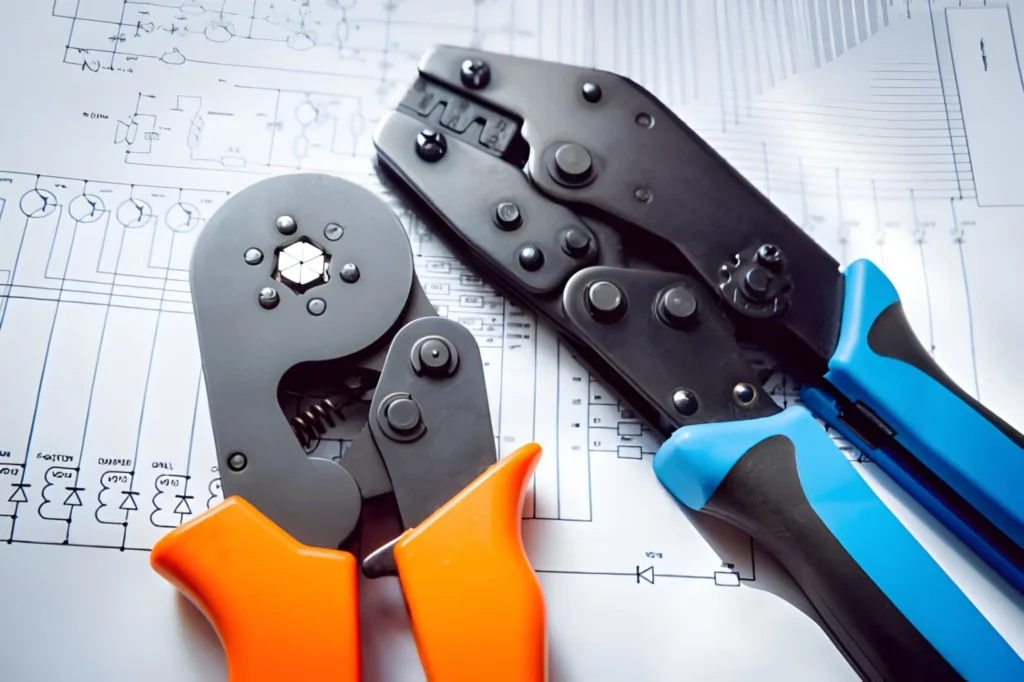
Walk into any control cabinet, and you will see hundreds—sometimes thousands—of ferrules. Yet many shops still treat ferrule crimping tools as an afterthought. That usually shows up later as loose connections, nuisance downtime, or failed inspections. This post walks through what ferrule crimping tools are, how they actually work, and how you can choose the […]
Read More