Walk into any control cabinet, and you will see hundreds—sometimes thousands—of ferrules. Yet many shops still treat ferrule crimping tools as an afterthought. That usually shows up later as loose connections, nuisance downtime, or failed inspections.
This post walks through what ferrule crimping tools are, how they actually work, and how you can choose the right ones for your panel shop or production line. The goal is simple: help you buy tools that give repeatable, standards‑compliant crimps and keep your electricians and machines out of trouble.
Along the way, you will see where a cable ferrule crimping tool makes sense, when you need a more advanced wire ferrule crimping tool, and what to watch out for before you send a purchase order.
What are ferrule crimping tools and how do they work?
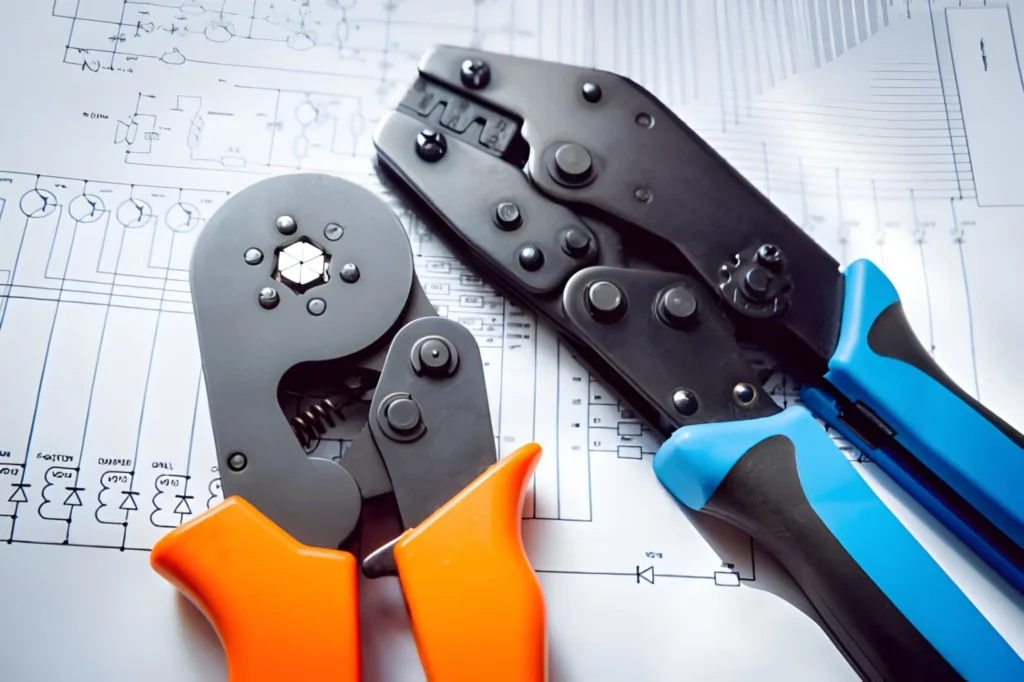
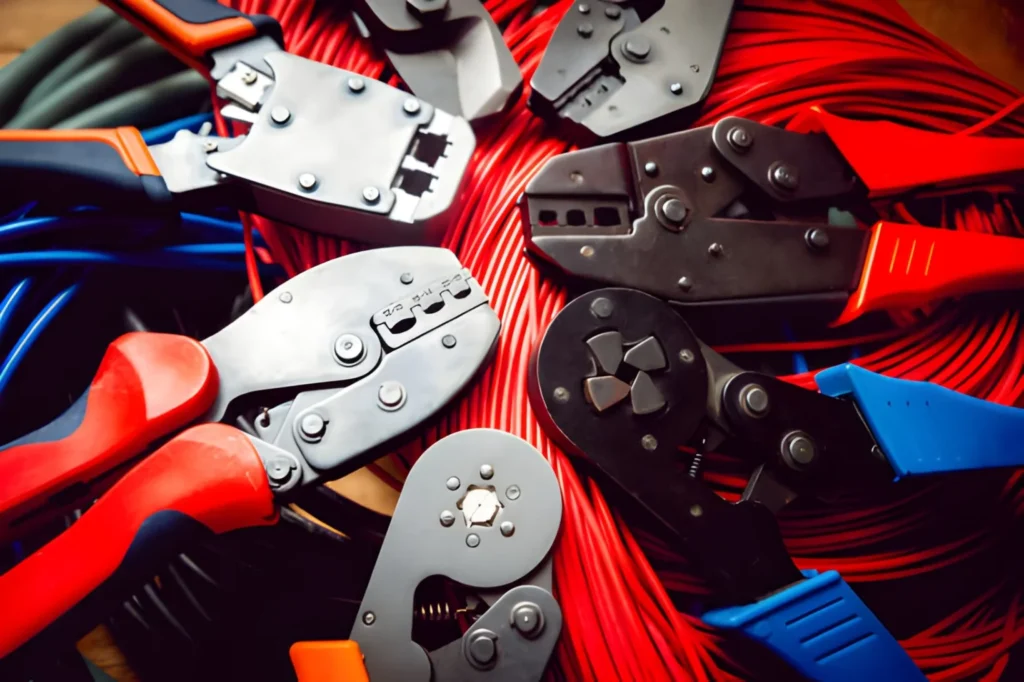
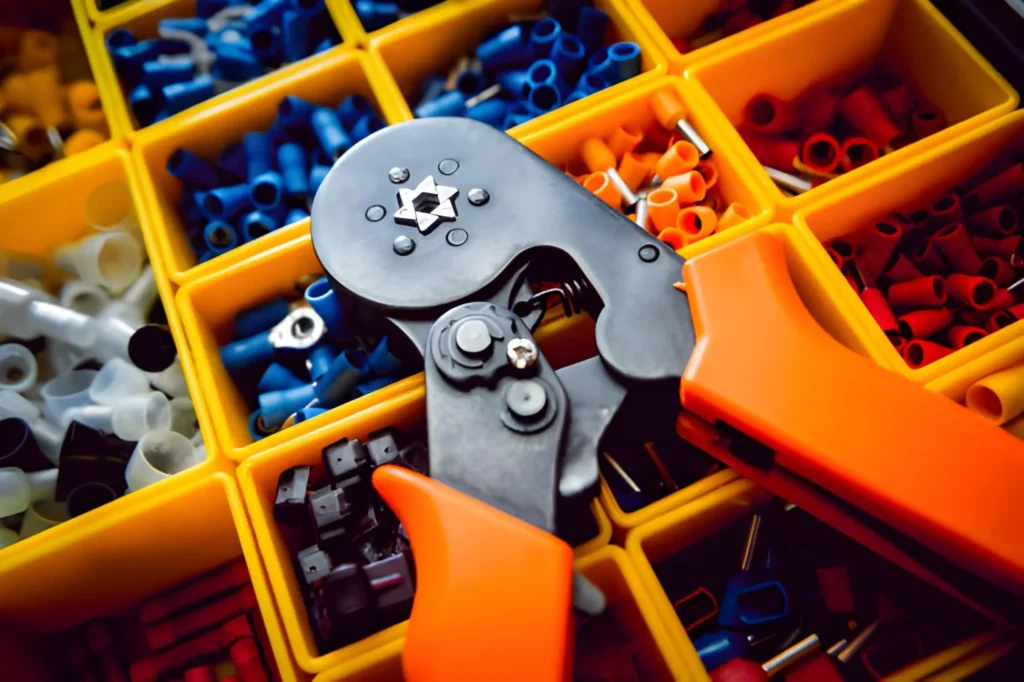
At the simplest level, ferrule crimping tools are hand or powered tools that compress a metal ferrule sleeve onto the stripped end of a stranded conductor. The result is a solid, gas‑tight connection point that can be clamped reliably in terminal blocks, contactors, and breakers.
Why not just put bare stranded wire into the terminal? In real panels, strands can spread, get cut by the clamping screw, or loosen under vibration. A properly crimped ferrule:
Keeps all strands together under the barrel.
Distributes the clamping force evenly.
Reduces contact resistance and heating at the terminal.
Most ferrule crimping tools work in three basic steps:
You strip the wire to the correct length (usually matching the ferrule barrel length minus 0.5–1 mm).
You insert the wire into the ferrule until the insulation meets the ferrule collar.
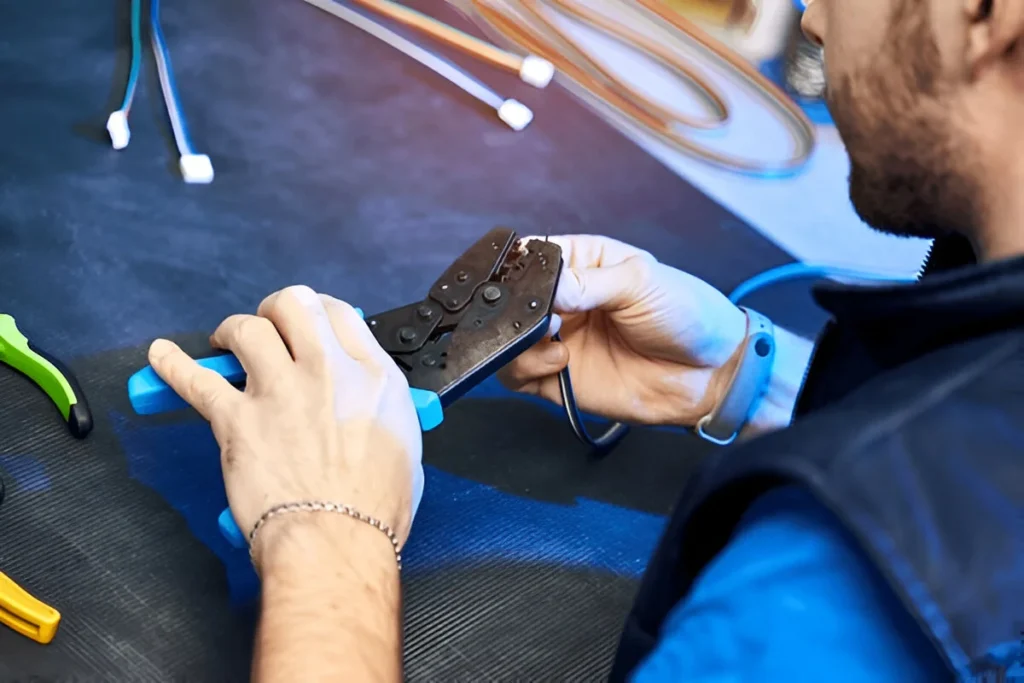
You place the ferrule into the crimping profile and activate the tool. The tool’s dies compress the barrel around the strands to a calibrated shape and force.
Good tools are designed to deliver a consistent crimp height and shape that match tested pull‑out forces and, ideally, standards like IEC 60352 or UL 486.
Typical components of a ferrule crimping tool
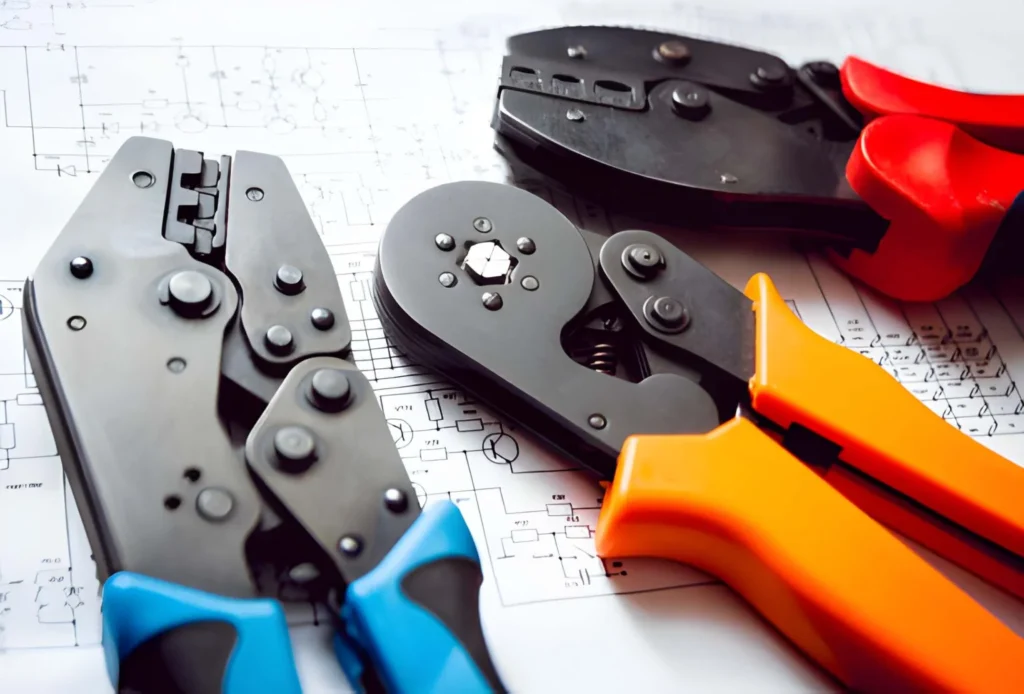
Crimping head with one or more die profiles (square, hex, trapezoid, etc.).
Mechanical drive (manual, ratchet, hydraulic, pneumatic, or electric).
Adjustment or range indication (AWG/mm² markings, color coding).
Handle design and leverage that control operator fatigue.
If your teams work in tight panels, even the pivot angle and tool length can affect whether your ferrule system is actually used correctly in the field.
Table 1 – Basic working features
Feature
Why it matters in daily use
Crimp profile shape
Affects pull‑out force and compatibility with blocks
Ratchet mechanism
Ensures full crimp cycle and repeatability
Capacity range
Defines which wire sizes can be handled
Handle ergonomics
Controls fatigue in high‑volume panel building
Main types of ferrule crimping tools and where they fit
Not all ferrule crimping tools are created equal. The “best ferrule crimping tool” for a maintenance cart is not the same as the right tool for a high‑volume panel shop or cable harness line.
You will typically see four main categories.
1. Basic manual crimpers
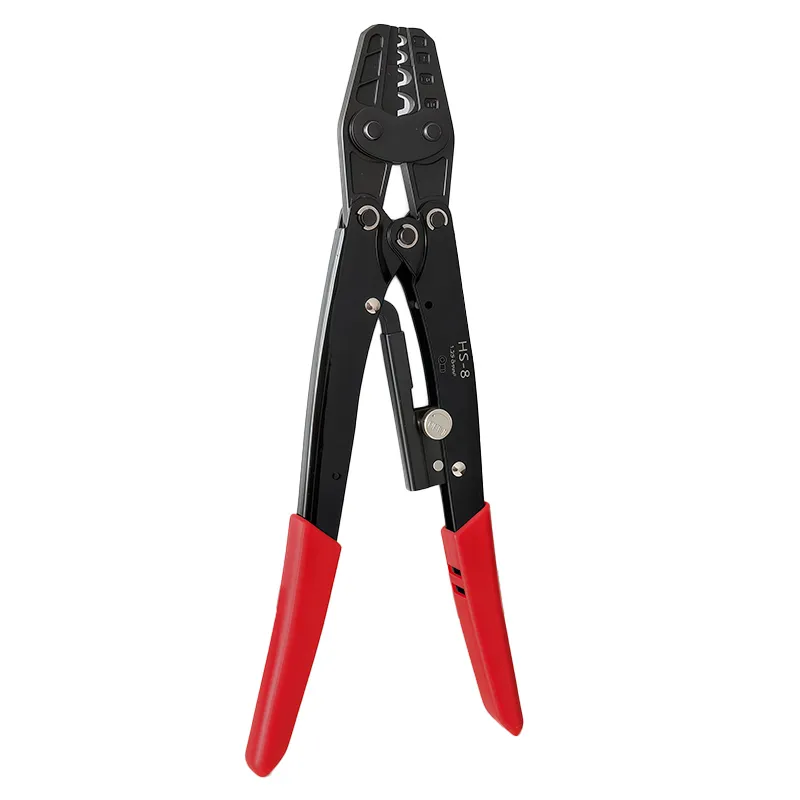
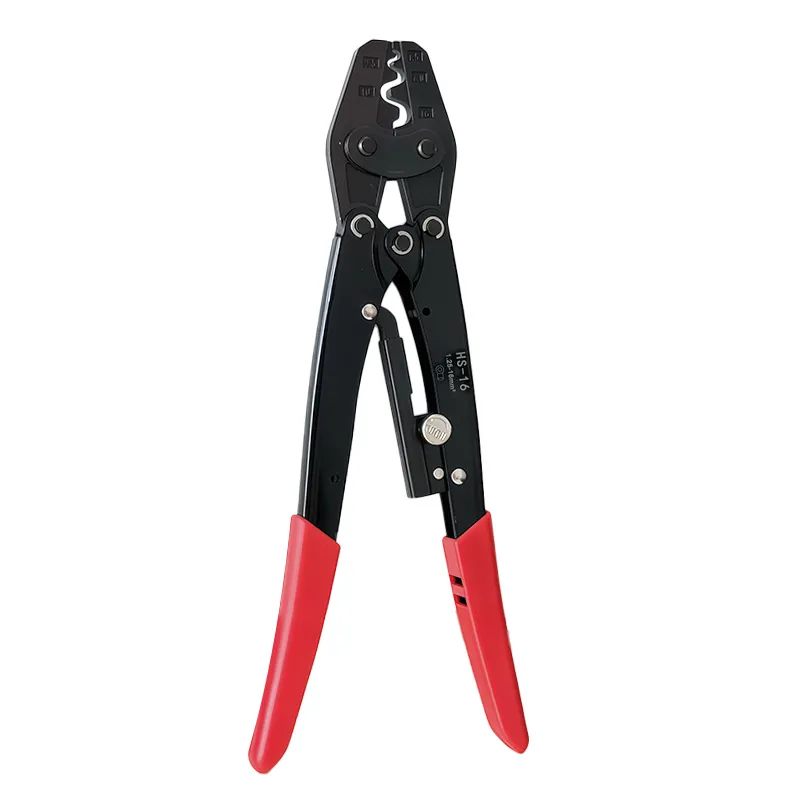
These are simple pliers with fixed nests or profiles for a defined size range, often marked 0.5–6 mm² or similar. Many have non‑ratcheting designs and require the operator to judge when the crimp is “tight enough.”
They are suitable for:
Low‑volume work.
Field maintenance and retrofit jobs.
Occasional ferrule use in small workshops.
However, they rely heavily on operator skill. Two technicians can apply different force and produce different crimp quality, which is a problem when you care about repeatability and compliance.
2. Ratcheting manual ferrule crimpers
This is where most professional panel builders start. A ratchet mechanism forces the operator to complete the full crimp stroke before the tool can open. That means every ferrule receives the designed compression.
A good wire ferrule crimping tool in this category often includes:
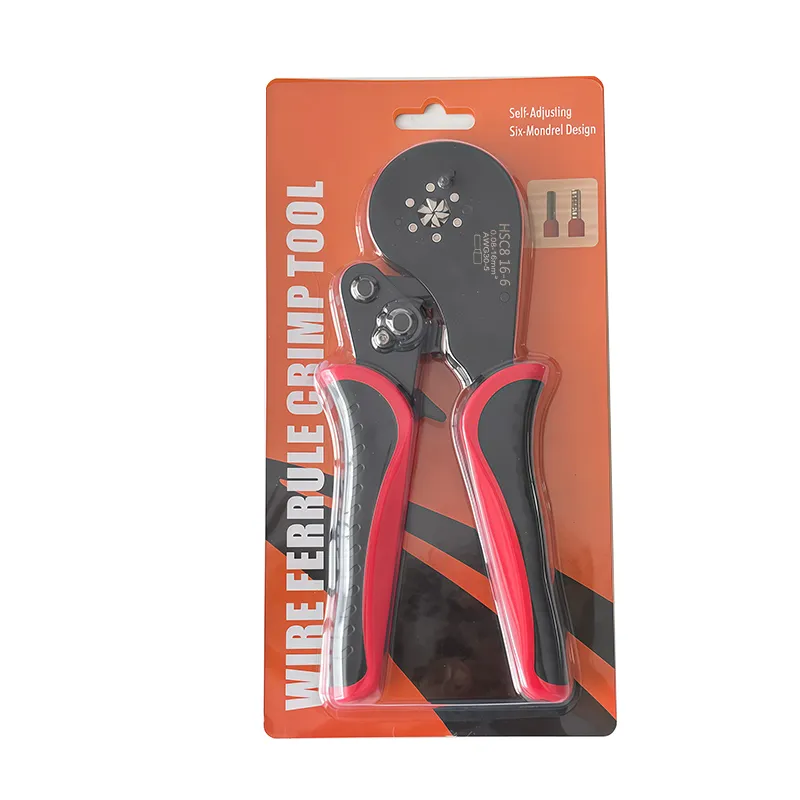
Self‑adjusting or semi‑automatic die that adapts to the cable size.
Marked range, for example 0.14–10 mm².
Square or hex crimp suitable for cage‑clamp terminal blocks.
These tools are ideal when you:
Build control panels or junction boxes daily.
Need consistent results across multiple workers and shifts.
Must satisfy customer or third‑party quality audits.
3. Pneumatic or hydraulic crimping tools
When wire sizes get larger, or volumes get high, manual force is not practical. Pneumatic or hydraulic ferrule tools multiply force and reduce operator fatigue.
You typically see them:
In cable assembly lines for machinery and harnesses.
In shops crimping ferrules on 10–70 mm² conductors for power distribution.
When you need very high pull‑out performance with minimal variation.
They may use foot pedals or triggers, which speeds up production but requires good process controls to avoid mis‑positioned crimps.
4. Fully automatic ferrule crimping and stripping machines
At the high end, some systems:
Cut wire to length.
Strip insulation.
Place and crimp ferrules in one cycle.
These are capital investments for OEMs, switchgear builders, or harness manufacturers with tens of thousands of terminations per month. If you are at that level, your question is less “Which crimping pliers?” and more “Which line concept and tooling interface will give the throughput and traceability we need?”
Table 2 – Comparing tool types
Tool type
Typical range
Best for
Basic manual
0.5–6 mm²
Low‑volume, maintenance
Ratcheting manual
0.14–10 mm² (typ.)
Daily panel building, consistent quality
Pneumatic/hydraulic
4–70 mm² (typ.)
Large conductors, higher volumes
Automatic machines
Configurable ranges
Mass production, OEM harnessing
If you are planning a new panel line or harness project, this is a good moment to talk with a tooling supplier about which ferrule system matches your cable sizes and standards.
How to choose ferrule crimping tools for your application
So, how do you decide which ferrule crimping tools are the right fit for your plant? It helps to walk through a few practical questions.
Match the tool to conductor range and standards
Start with the wire sizes your team actually uses. List the most common cross‑sections and types, for example:
Control wiring: 0.5–2.5 mm² (18–14 AWG).
Power control: 4–10 mm².
Field wiring: flexible cables, fine‑stranded conductors.
Then check:
Does the tool’s specified range fully cover your list?
Does it support both metric and AWG where needed?
Are there approvals or data sheets showing compliance with your target standards or OEM requirements?
For example, a cable ferrule crimping tool designed only for coarse‑stranded conductors may not give optimal results on fine‑stranded flexible cables used in drag chains.
Consider crimp profile and terminal types
Have you ever had a ferrule that looked perfect but didn’t seat nicely in the terminal block? That usually comes down to crimp profile shape.
Common profiles:
Square: Very common in control wiring; works well with spring and cage‑clamp terminals.
Hex: Often used for larger cross‑sections and power connections.
Trapezoid/oval: Common in some legacy tools and specific systems.
Before you buy, check:
What terminal blocks and devices are you using (screw clamp, spring clamp, push‑in)?
Does the tool maker recommend a specific profile for those terminals?
Are ferrules and tools part of a tested system with the same manufacturer?
When ferrules, tools, and terminals are part of a system, you gain some safety margin because the combination has often been tested for pull‑out force and temperature rise.
Ergonomics and productivity
In a drawing, all tools look comfortable. On a 9‑hour shift, some of them are not.
Consider:
How many terminations per day per worker?
Do operators often work at awkward angles inside cabinets?
Is there enough handle leverage to reduce strain for smaller operators?
Simple details like soft grips, angled heads, and low hand‑force requirements often pay back quickly in productivity and fewer repetitive strain complaints.
Total cost, not just purchase price
It can be tempting to choose the lowest‑priced ferrule tool, especially for a one‑time project. But think about:
Frequency of calibration or replacement.
Downtime or rework if crimps fail inspection.
Wasted ferrules due to mis‑crimps.
A higher‑quality best ferrule crimping tool might cost more upfront, but if it saves 10 minutes of rework per panel, the payback is surprisingly fast in a professional shop.
Table 3 – Key selection criteria
Criterion
What to check
Size range
Matches all common conductor sizes
Standards/system
Tested with your ferrules and terminals
Profile compatibility
Fits your terminal block types
Ergonomics
Acceptable hand force and tool weight
Lifecycle cost
Durability, calibration needs, rework risk
If you are reviewing multiple models, you can always request a small trial batch or sample crimp test before committing to a full tooling rollout.
Common mistakes with ferrule crimping tools (and how to avoid them)
Even the best tools cannot fix bad habits. Many connection issues come from a few predictable mistakes that show up again and again in audits.
Using the wrong ferrule size
A ferrule that is too large will not compress the strands properly; a ferrule that is too small may not accept all the strands.
Typical problems:
Visible gaps between ferrule barrel and strands.
Strands cut, bent back, or left outside the barrel.
Insulation pushed inside the barrel during crimping.
To avoid this:
Use the wire size chart provided by your ferrule supplier.
Train technicians to check that the conductor fills the barrel before crimping.
Standardize ferrule assortments in the shop instead of mixing brands and ranges randomly.
Incorrect strip length
If strip length is too short, insulation ends up inside the crimp area. If it is too long, you see bare conductor between the ferrule collar and insulation.
Both conditions can reduce mechanical stability and increase corrosion risk.
Practical tips:
Align strip length with ferrule barrel length, usually so the conductor ends just short of the barrel end.
Use adjustable automatic wire strippers to keep length consistent.
Spot check a few wires per batch or per shift for compliance.
Crimping on the wrong part of the ferrule
Have you ever seen a crimp right across the plastic collar? That ferrule will probably pass a visual test from a distance but fail under load.
The crimp should always be on the metal barrel, not on the plastic collar, and positioned so the entire compressed area is directly over the strands.
Mixing incompatible tools and ferrules
A tool designed for a particular ferrule system may still crimp other brands, but pull‑out force and contact area can vary.
When possible:
Keep tools and ferrules from compatible or the same manufacturer.
If you must mix, do at least basic pull‑off tests in‑house and document the results.
Avoid re‑crimping the same ferrule in a different tool to “fix” a bad crimp; that usually makes it worse.
If you want to standardize your workshop, it often helps to talk with a supplier who can recommend a complete ferrule and tool package instead of buying components separately.
Practical tips for installation, operation, and maintenance
Once you have selected your ferrule crimping tools, the daily practices around them will make the difference between “works” and “really reliable.”
Operational best practices
Store tools in a dry, clean place, not at the bottom of a toolbox covered in metal chips.
Assign tools to stations or individuals and track them, especially ratcheting and calibrated tools.
Use the full ratchet cycle; train operators not to release or override the mechanism early.
In industrial environments with oil mist or dust, it helps to clean the crimping head regularly so debris does not affect the crimp profile.
Calibration and inspection
For high‑volume or safety‑critical work:
Schedule periodic visual inspections of crimp profiles and tool wear.
Perform simple pull‑test checks on sample crimps by size, for example tugging with pliers or using a small force gauge.
Replace or service tools when the crimp height or pull‑out readings drift beyond recommended tolerances.
Some plants implement a “red tag” system: if a technician notices inconsistent crimps, they tag the tool and pull it from service until checked.
Training and standard work
Even a very user‑friendly cable ferrule crimping tool benefits from a 15‑minute training session. Include:
How to choose ferrule size for a given cable.
Correct strip length demonstration.
Good vs. bad crimp examples (photos in your work instructions help a lot).
What to do when a crimp looks suspicious (cut and redo, never reuse).
Standardizing these details reduces variation between technicians and shifts and gives purchasing a clear basis when adding new tools or evaluating suppliers.
If you are planning a new project or setting up a production cell, it can be useful to send sample cables and ferrules to a tooling partner and ask for recommended settings and documentation up front.
Conclusion: turn ferrule crimping tools into a controlled process
Ferrule crimping tools may look like simple hand pliers, but in your plant they are actually quality‑critical equipment. The right selection, combined with good habits, ensures every ferrule crimp is reliable, repeatable, and ready for inspection.
By matching tool type to your conductor range, terminals, and production volume, you turn “crimping” from a manual art into a controlled process. Whether you choose a compact cable ferrule crimping tool for maintenance work or invest in the best ferrule crimping tool for your main panel line, the payoff shows up as fewer loose connections, less rework, and smoother audits.
If you are reviewing your current tooling and want a second opinion, feel free to share your typical wire sizes and standards and ask for a short recommendation list.
Looking for a specific ferrule crimping solution for your next project? Send your application details and request a tailored tool and ferrule proposal.
Ready to compare options for your workshop or panel line? Contact our sales team for datasheets, pricing, and sample crimp evaluations.
Frequently asked questions about ferrule crimping tools
1. Do I really need ferrules if my terminal blocks accept bare wire?
Technically, many terminal blocks are rated for bare stranded conductors. In practice, using ferrules provides better repeatability and helps reduce issues like loose strands, uneven clamping, and long‑term loosening under vibration. In control panels with frequent modifications or in machines that travel, ferrules also make it easier to re‑terminate and inspect connections. That is why many OEMs and end‑users now specify ferrules as a standard requirement even where codes do not strictly mandate them.
What is the difference between a wire ferrule crimping tool and a general crimper?
A general crimper might have profiles for cable lugs, terminals, and sometimes ferrules, but the geometry is usually a compromise. A dedicated wire ferrule crimping tool has profiles specifically designed for ferrule barrels and the target wire range. This dedicated geometry gives better contact area, predictable pull‑out force, and a crimp shape that fits common terminal blocks. If ferrules are more than an occasional task in your shop, a dedicated tool is almost always the better option.
Are self‑adjusting ferrule crimping tools accurate enough for industrial use?
Quality self‑adjusting tools from reputable brands can produce highly consistent crimps within their specified range and are widely used in professional panel building. Their internal mechanism automatically adapts the die opening to the wire size as long as the conductor and ferrule match the tool’s spec. The key is not to push them beyond their rated range and to combine them with compatible ferrules. As always, doing a few sample pull‑tests when you introduce a new tool into your process is a smart move.
Want strong, safe, and long-lasting wire connections? Then you need more than just good wire and connectors – you need the right crimping tool and a bit of know-how. In this guide, you’ll learn what crimping pliers are, how they work, the different types on the market, and how to choose the best one for your jobs. […]
JiaPaiMi Precision Ratcheting Crimper for Dupont 2.54mm Connectors When working with Dupont 2.54mm connectors, getting a solid, reliable crimp is crucial. The JiaPaiMi Precision Ratcheting Crimper is designed specifically for this purpose. Built to deliver consistent, professional-grade crimps on 2.54mm pitch terminals, it eliminates the common headaches of loose or weak connections in DIY electronics […]
Key Features of Ratcheting Crimping Tool at a Glance Discover the essential features that make the JiaPaiMi ratcheting crimping tool a staple for professionals and DIYers alike. Designed for precision and durability, this electrical crimping tool excels in consistent, secure connections every time. Feature Description Benefit Precision Ratcheting Mechanism Ensures full-cycle crimping with reliable locking […]
We use cookies to enhance your browsing experience, serve personalised ads or content, and analyse our traffic. By clicking "Accept All", you consent to our use of cookies.