Have you ever stood in front of a wiring project wondering whether a Dupont crimp tool or a JST crimp tool is the right choice for you?
You are not alone. Many engineers, technicians, and sourcing managers face this exact question when working with low-voltage electronics, control panels, or industrial assemblies. Understanding the difference between a Dupont and JST crimp tool can save you time, reduce rework, and ensure reliable electrical connections.
In this article, we will break down the practical differences, use cases, and decision factors so you can confidently choose the right tool for your application.
Understanding crimp tools and why they matter
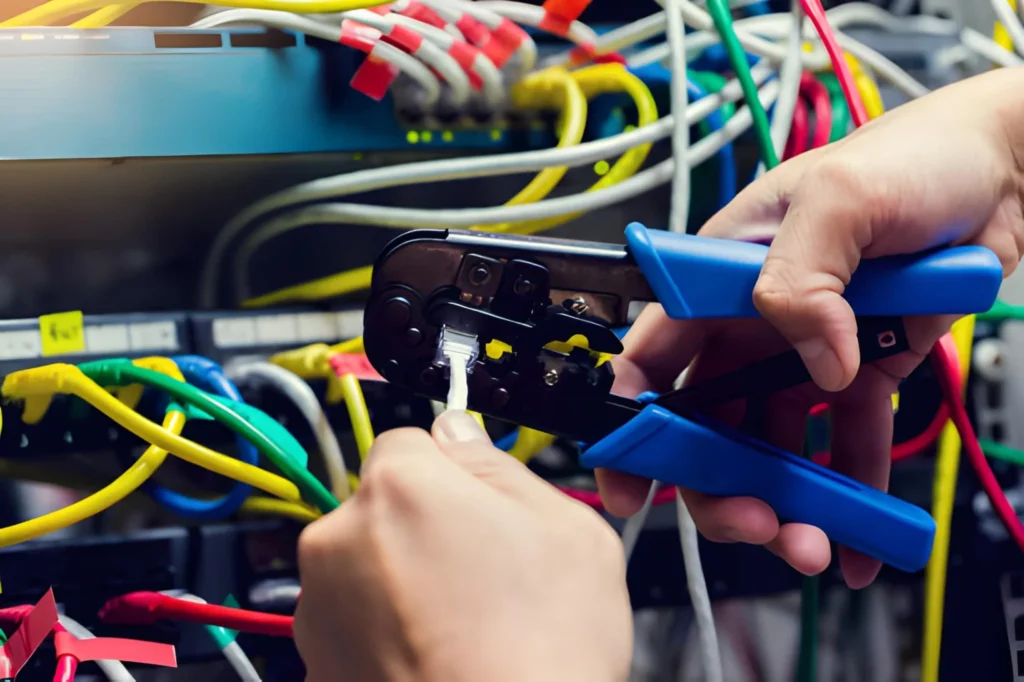
Before comparing tools, let’s align on what a crimp tool actually does. A crimp tool mechanically attaches a metal terminal to a wire by deforming the terminal around the conductor and insulation. When done correctly, crimping creates a gas-tight, vibration-resistant connection.
In B2B environments, especially industrial electronics, poor crimping often leads to:
Intermittent signals
Overheating
Costly field failures
That is why choosing the correct Dupont and JST crimp tool is not just a tooling decision, but a quality decision.
What is a Dupont crimp tool?
A Dupont crimp tool is designed for open-barrel terminals commonly referred to as Dupont connectors. These connectors are widely used in prototyping, development boards, and low-current signal wiring.
Typical characteristics of Dupont connectors
Dupont-style connectors are known for flexibility and ease of use. You will often see them in breadboard jumpers and internal wiring of control systems.
Key features include:
Standard 2.54 mm pitch
Open-barrel male and female terminals
Compatible with 22–28 AWG wires
A Dupont crimp tool usually has simpler die geometry, making it forgiving for beginners and small-batch assembly.
When Dupont crimp tools are commonly used
You may prefer a Dupont solution if you are working on:
Rapid prototyping
Arduino or development boards
Low-current signal applications
Custom wiring harnesses in small volumes
In these scenarios, the Dupont and JST crimp too comparison often starts with cost and ease of use, where Dupont tools typically win.
Feature
Dupont Crimp Tool
Typical wire gauge
22–28 AWG
Connector pitch
2.54 mm
Learning curve
Low
Common users
Engineers, hobbyists, OEM labs
What is a JST crimp tool?
A JST crimp tool is engineered for precision and repeatability. JST connectors are widely used in commercial and industrial products where vibration resistance and compact size are critical.
Characteristics of JST connectors
JST connectors come in multiple series such as PH, XH, SH, and VH. Each series has unique terminal geometry, which is why tool compatibility is so important.
Common attributes include:
Smaller pitch options (as low as 1.0 mm)
Higher retention force
Better resistance to vibration
A JST crimp too must match the terminal series exactly to achieve correct conductor and insulation crimps.
Typical industrial use cases
You will frequently see JST crimp tool applications in:
Consumer electronics manufacturing
Power supply assemblies
Industrial control systems
Automotive subassemblies
In these environments, precision outweighs flexibility.
Feature
JST Crimp Tool
Connector pitch
1.0–3.96 mm
Terminal specificity
High
Crimp consistency
Excellent
Typical users
OEMs, contract manufacturers
Key differences between Dupont and JST crimp tools
Now let’s directly compare the Dupont and JST crimp tool from a practical standpoint. While both tools serve the same basic function, their design intent is quite different.
Tool design and precision
Dupont tools are often universal or semi-universal. JST tools, by contrast, are engineered for specific terminal families.
This means:
Dupont tools tolerate variation
JST tools demand accuracy
If your production tolerances are tight, JST tooling becomes essential.
Application flexibility
A Dupont crimp tool is flexible across many generic terminals. A JST crimp too is specialized and less forgiving if misused.
Comparison point
Dupont
JST
Flexibility
High
Low
Precision
Moderate
High
Setup time
Minimal
Moderate
Risk of mis-crimp
Medium
Low (with correct tool)
Cost considerations and ROI
Cost is often a deciding factor in the Dupont and JST crimp tool decision.
Dupont crimp tools are generally affordable and widely available. JST tools, especially genuine ones, are significantly more expensive.
However, consider total cost of ownership:
Scrap reduction
Labor efficiency
Field failure risk
In high-volume production, a JST crimp tool often delivers better long-term ROI despite higher upfront cost.
Choosing the right tool for your project
So how do you decide between a Dupont crimp tool and a JST crimp tool? Ask yourself a few practical questions.
Is this a prototype or a production build?
What connector series are specified in the BOM?
Are vibration and reliability critical?
If you are sourcing for an OEM or system integrator, selecting the correct Dupont and JST crimp too upfront avoids redesigns later.
If you are unsure which solution best fits your wiring harness or control cabinet design, you can always reach out to us for technical guidance or a quick quote tailored to your application.
Common mistakes to avoid
Even experienced technicians can run into issues when using the wrong tool.
Typical errors include:
Using a Dupont tool on JST terminals
Crimping incorrect wire gauges
Ignoring insulation crimp height
Avoiding these mistakes protects both performance and compliance.
Conclusion
Understanding the difference between a Dupont and JST crimp tool ultimately comes down to application, precision, and scale. Dupont tools shine in flexibility and prototyping, while JST tools excel in consistency and industrial reliability. By matching the tool to your connector type and usage scenario, you reduce risk and improve long-term performance.
When chosen correctly, the right crimp tool is not just a piece of hardware—it is a safeguard for your entire electrical system.
FAQ
What type of crimp tool is used in electric power meters?
Electric power meters often use JST or similar precision connectors due to vibration resistance and compact design. A JST crimp tool is commonly preferred for meter signal and power connections.
Are Dupont connectors suitable for electric power meter wiring?
Dupont connectors may be used for testing or temporary setups, but they are generally not recommended for permanent electric power meter installations.
Why is crimp quality important in electric power meters?
Poor crimps can lead to inaccurate readings, signal loss, or overheating, all of which compromise meter performance and safety.
Can one crimp tool handle all wiring inside electric power meters?
No. Different terminals require specific tooling. Using the correct Dupont and JST crimp tool ensures reliable connections in metering applications.
If you work with electrical wires, cables, or connectors, a pliers crimping tool quickly becomes your best friend. It looks simple. It feels familiar in your hand. But when used correctly, it can turn loose, unreliable connections into strong, safe, and professional results. In this guide, you will learn what a pliers crimping tool is, […]
Whether you’re a professional electrician, plumber, or a DIY enthusiast, understanding crimper tool is important. Here, we’ve gathered common questions about crimping tools, along with insights and tips from JiaPaiMi. 1.What is a Crimpier Tool, and How Does it Work? A crimper tool, like the CV Boot Clamp Crimping Pliers, is used to connect a […]
Key Features & Benefits The JiaPaiMi Dupont connector crimping tool offers precision and reliability for every DIYer and maker. Its precision ratcheting mechanism guarantees consistent, secure crimps every time, eliminating guesswork. Feature Benefit Precision ratcheting mechanism Ensures gas-tight, uniform crimps Ergonomic non-slip handles Comfortable grip, less hand fatigue with quick-release Multi-profile die sets Perfect for […]
We use cookies to enhance your browsing experience, serve personalised ads or content, and analyse our traffic. By clicking "Accept All", you consent to our use of cookies.