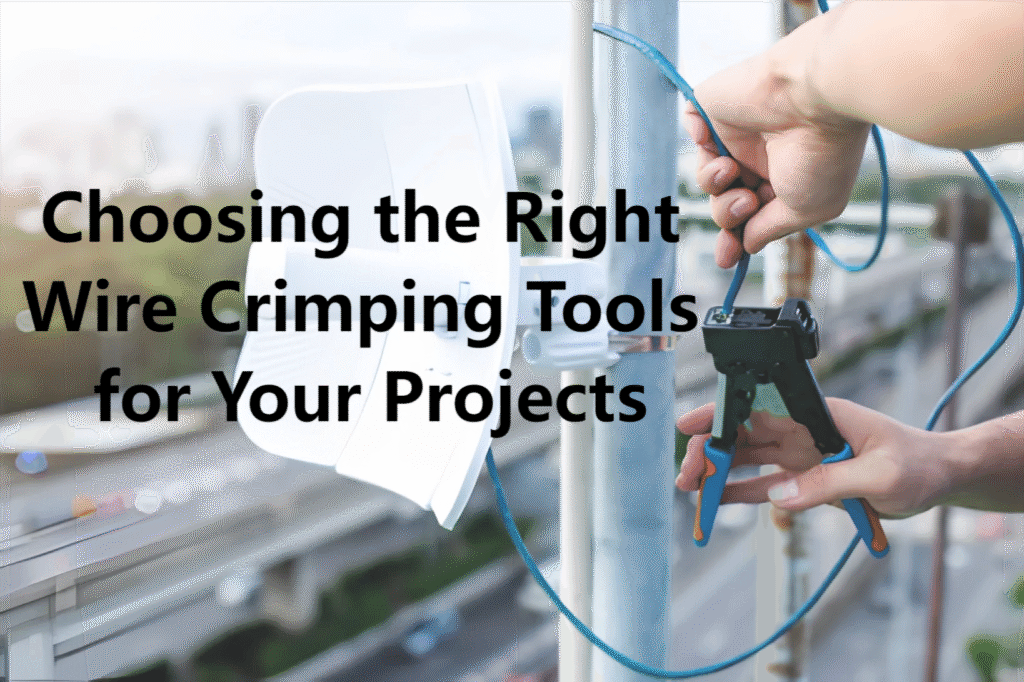
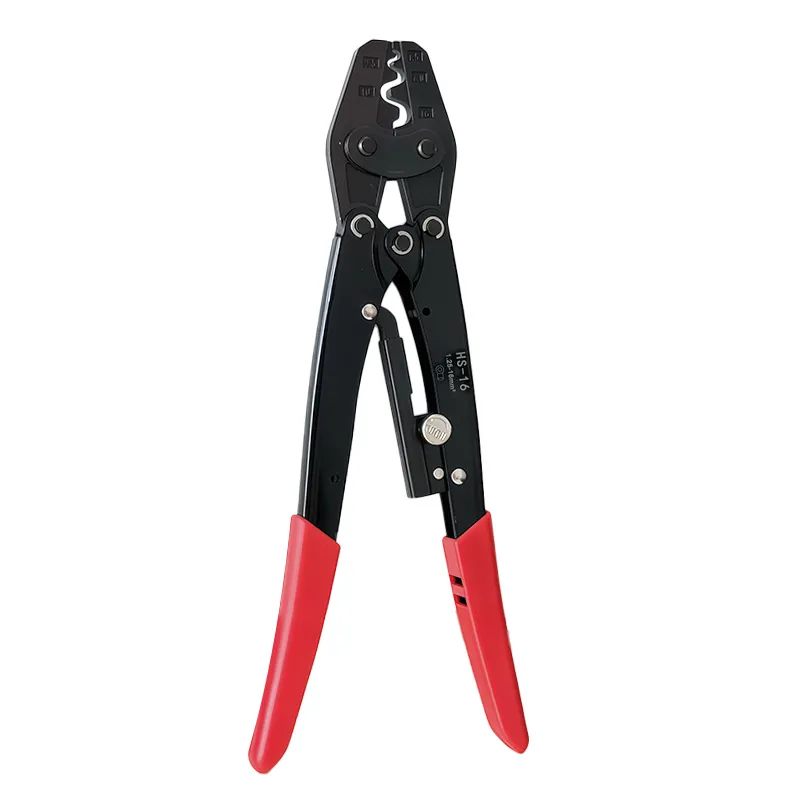
Wire Crimping Tools are essential for forming strong, reliable electrical connections.
In this guide, we’ll explain how to choose the right tool for different terminals and applications, helping you work faster and with greater confidence.
What is a Wire Crimping Tools?
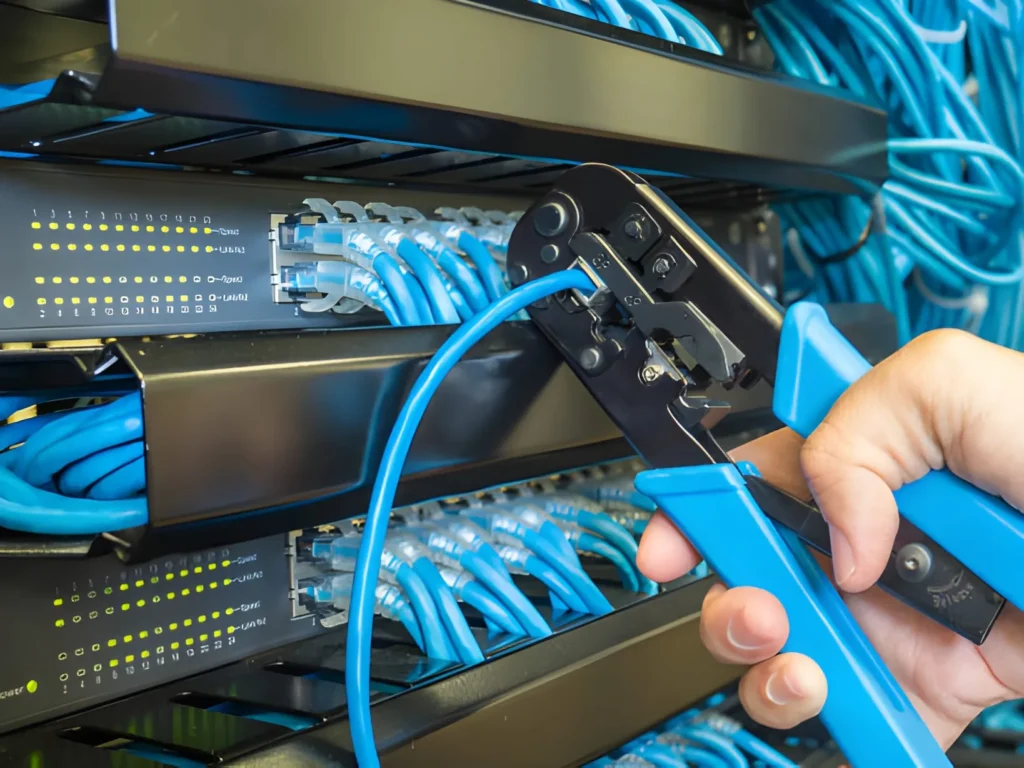
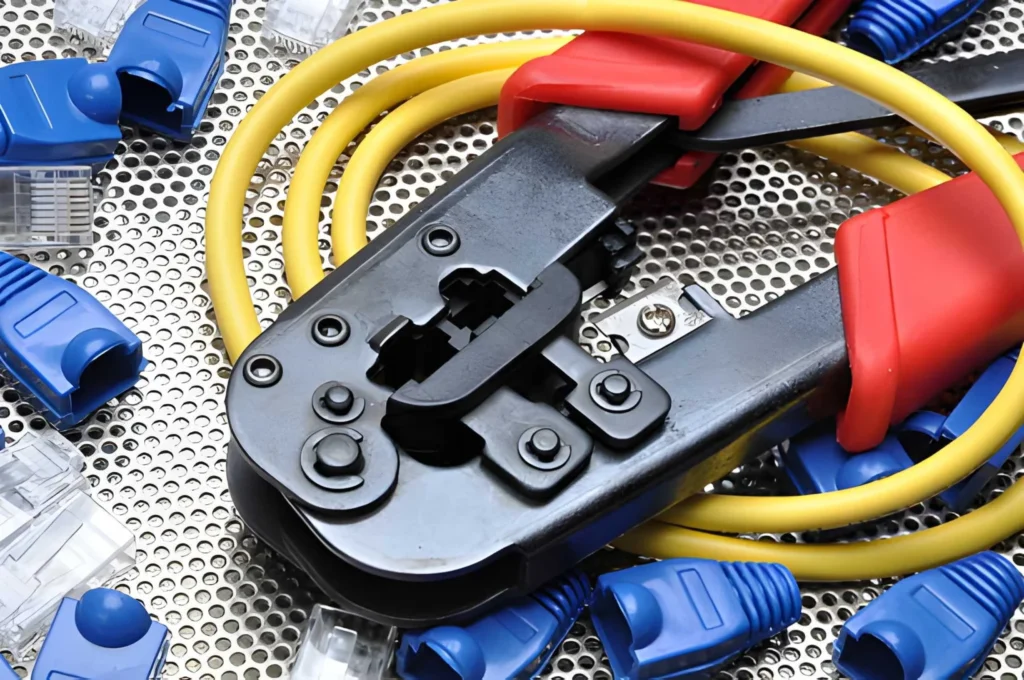
A wire crimping tools is used in electrical work to join two wires or connect a wire to a connector. These tools come in various shapes and sizes, but their core purpose is to form a secure connection.
Crimped joints are typically stronger and more flexible than soldered ones because they are mechanical rather than chemical bonds. How do you pick the right crimping tool for your project? Read on.
How to Choose the Best Wire Crimping Tools?
An electrician needs the right tool to do the job well. Using the wrong tool can cause frustration and require rework. DIY enthusiasts also benefit from a reliable wire crimping tools when building an electrical system.
There are several crimping tools on the market, but two types are most commonly used. They differ in design and application, and this guide explains them in detail. These tools are grouped by terminal type, so understanding terminals is essential first.
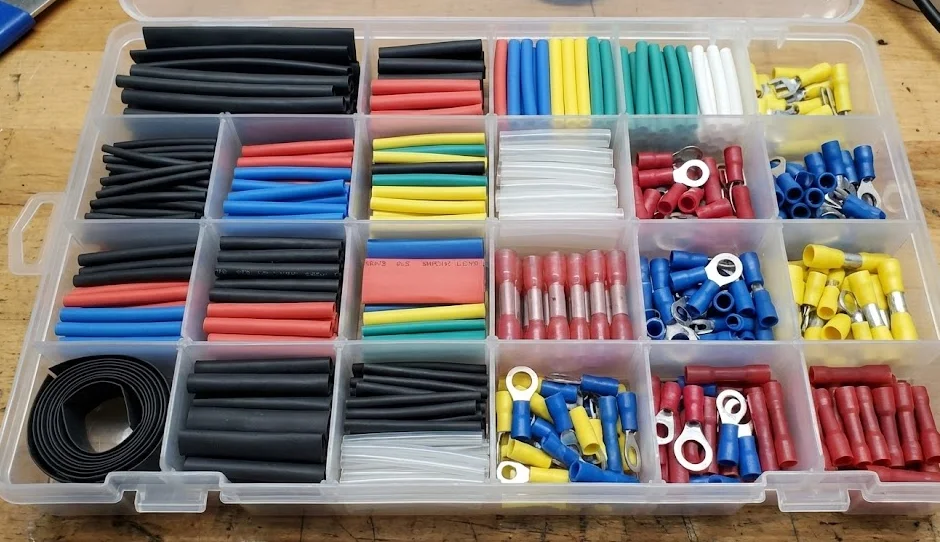
Wire terminals are widely used in electrical work. In Europe, wire ferrules (bootlace terminals) are particularly common. Terminal designs include ring, spade, hook, butt, bullet, pin, and more.
Pin terminals resemble wire ferrules but differ in how they are crimped. Pin terminals are intended for terminal block applications, while wire ferrules are often better for industrial uses. Wire terminals are crimped on the insulation with the central area having a diameter smaller than the wire; wire ferrules are crimped at the end with a central bore larger than the wire.
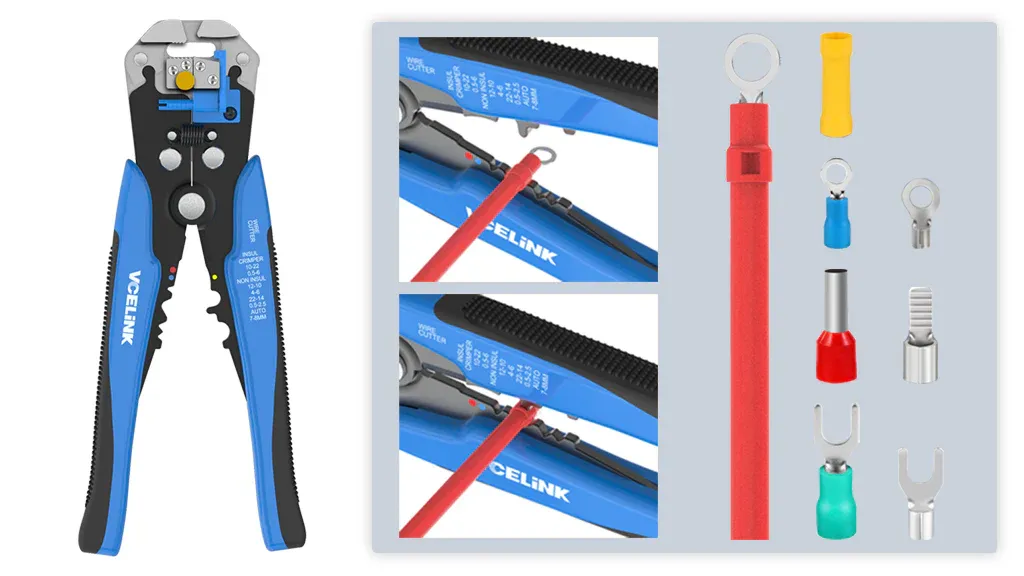
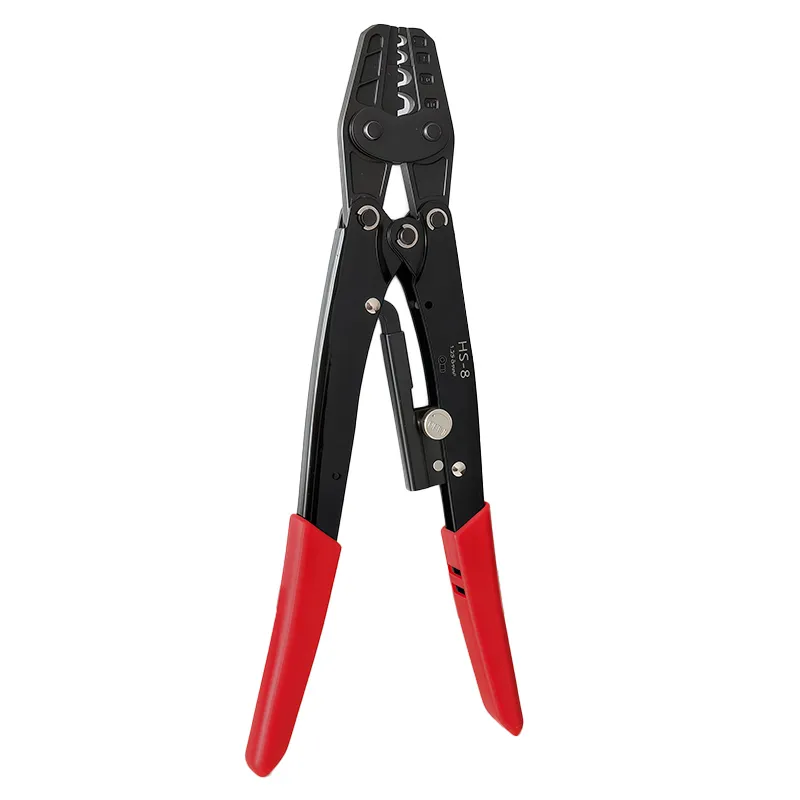
A terminal crimper is highly versatile and can crimp many kinds of wire terminals, including ring, spade, and butt terminals. It is usually labeled with AWG on the body or grip, enabling crimping across different wire gauges.
Tips: When selecting a crimping tool, consider the wire size. What is AWG? The full name of AWG is American Wire Gauge. It was introduced in 1857 to unify cable wire measurements. Generally, larger AWG numbers correspond to thinner wires. For example, 16 AWG is thinner than 10 AWG.
Terminal Crimper
Take a look at the VCELINK terminal crimper, an all-in-one tool that combines cutting, stripping, and crimping. It can crimp 10-22 AWG insulated and non-insulated terminals and strip 10-24 AWG wires. It also helps cut copper, aluminum, or steel wires. This is a must-have for electrician engineers and DIY enthusiasts.
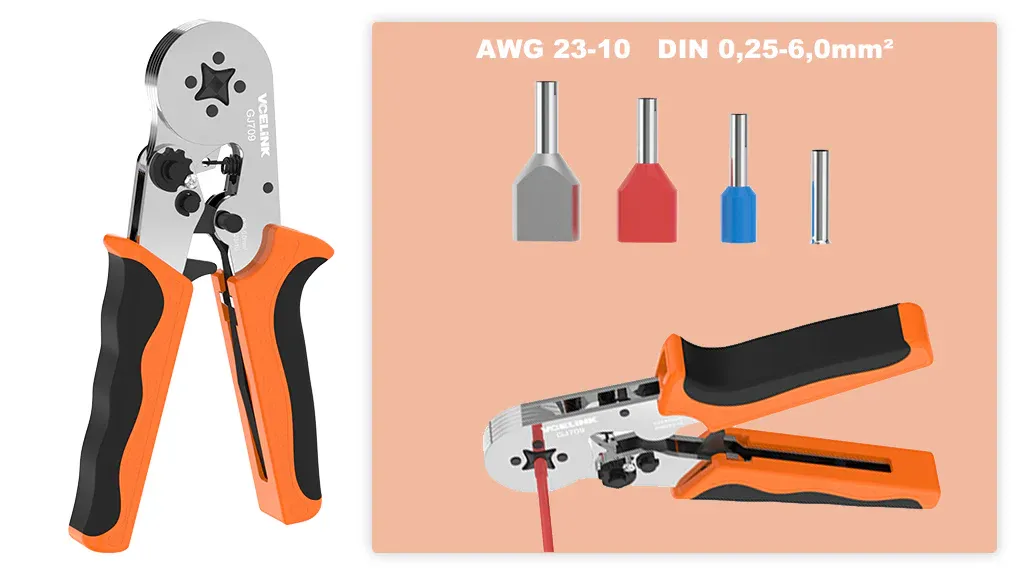
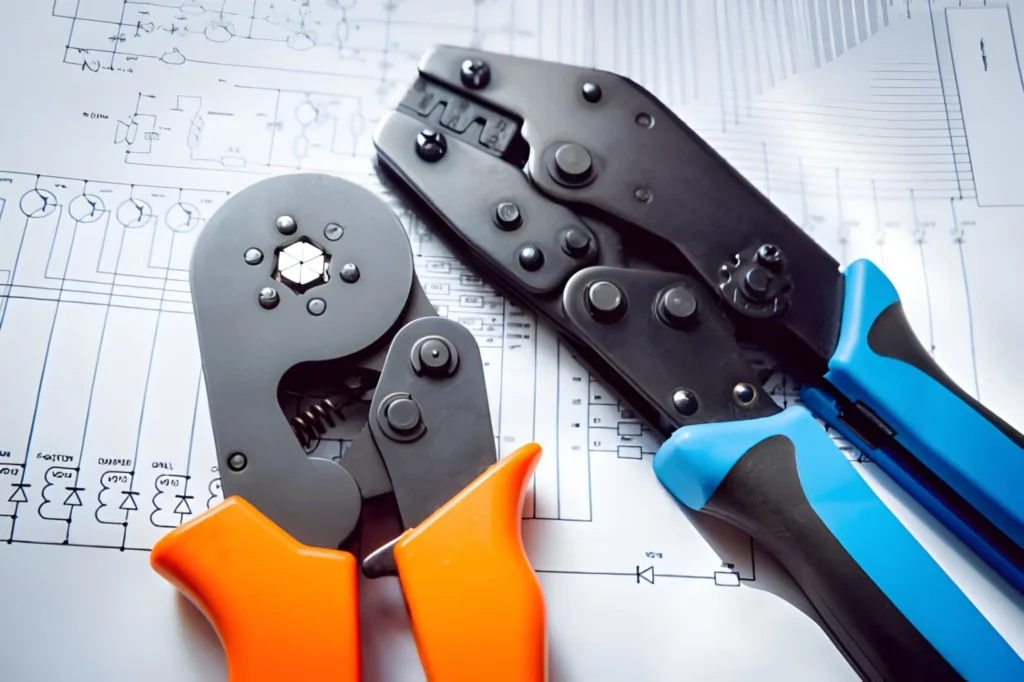
Ferrule crimpers are used to crimp stranded copper wires with ferrules. They are generally universal and can crimp various ferrules. Most ferrule crimpers look similar, with differences mainly in the crimp shape. This tool is ideal for electricians and DIYers for reliable connections in applications like car audio and speaker wiring.
VCELINK GJ709 Features:
Suitable for insulated and non-insulated ferrules from 10 to 23 AWG
Non-slip design for easy use
Ratchet self-adjusting design to match different terminal sizes
Nickel plating for corrosion and wear resistance
Final Thoughts
Crimping wires is possible without a dedicated tool, but using the right crimper for each terminal type makes the process faster and more reliable. With two main crimping tool types available, you can select the one that fits your needs.
For more information, visit our blogs. While CNJPM provides general guidance for customers and visitors, it should not be considered professional advice.
Shop Professional Crimping Tools
Explore durable, precise tools designed for professional electricians and DIY enthusiasts.
What is the difference between a ferrule crimper and a terminal crimper?
A ferrule crimper is designed to crimp wire ferrules onto stranded wire ends, while a terminal crimper handles a variety of insulated or non-insulated terminals. Each suits different applications based on terminal type and wire gauge.
How do I choose the right wire gauge for crimping?
Check the tool’s specified AWG range. AWG (American Wire Gauge) numbers indicate wire thickness; larger numbers mean thinner wires. Match the tool’s range to your wire size for reliable crimps.
Can I crimp without a dedicated tool?
It’s possible with makeshift methods, but a proper Wire Crimping Tools provides consistent crimps, reduces damage risk, and saves time.
What should I consider when buying a crimping tool?
Consider compatibility with your terminal types (ring, spade, butt, ferrule, etc.), the range of wire gauges, handle comfort, and whether a self-adjusting or ratchet mechanism is preferred.
Are there multi-function crimping tools?
Yes. Some tools combine cutting, stripping, and crimping in one device, which can improve efficiency for frequent users.
How do I maintain a crimping tool?
Keep blades and dies clean, apply light lubrication to moving parts, and store in a dry environment to prevent corrosion.
Table of Contents Introduction to Heat Shrink Insulated Terminals Crimping In demanding environments such as marine, automotive, and outdoor industrial installations, heat shrink insulated terminals crimping provides a higher level of protection than ordinary cold-press joints. When you combine a proper heat shrink insulated terminals crimping tool with quality connectors like the HS-40 ratchet crimper […]
Walk into any control cabinet, and you will see hundreds—sometimes thousands—of ferrules. Yet many shops still treat ferrule crimping tools as an afterthought. That usually shows up later as loose connections, nuisance downtime, or failed inspections. This post walks through what ferrule crimping tools are, how they actually work, and how you can choose the […]
Professional Wire Termination Made Effortless When it comes to secure and reliable wire termination, the JiaPaiMi crimping tool for ferrules stands out as a trusted choice for electricians. Designed to handle both insulated and uninsulated ferrules with ease, this tool ensures that every connection is tight and compliant with DIN 46228 standards. Why make the […]
We use cookies to enhance your browsing experience, serve personalised ads or content, and analyse our traffic. By clicking "Accept All", you consent to our use of cookies.